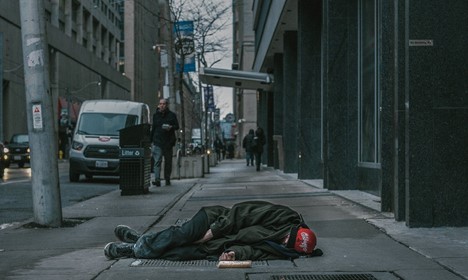
The History Of Evictions

Featured

Evictions in Canada have a long history, beginning with the forced displacement of Indigenous Peoples due to colonization and European settlement. In this three-part blog series focusing on shelter diversion and eviction prevention (SD-EP), we will explore past policies and governing documents that continue to contribute to homelessness and impact efforts in Canada today.

Shelter Diversion (SD) is a strategy that diverts individuals and families from entering the emergency shelter system by providing them alternate supports to prevent their homelessness. Supports can include providing immediate alternative housing and connections to various services, such as financial assistance. Similarly, Eviction Prevention (EP) initiatives support individuals and families so that they do not face eviction and avoid becoming homeless.

To develop effective SD-EP programs, it helps to begin with a historical perspective to understand the nature of the problem of eviction so that we can impact the underlying causes and avoid reproducing harms that evictions have caused over centuries. In this blog, we will focus on the Doctrine of Discovery and the National Housing Act as two examples that show the continuity of colonial policies and governing documents favouring the displacement of Indigenous Peoples and other marginalized groups.

The Doctrine of Discovery
“…invade, search out, capture, vanquish, and subdue all Saracens and pagans whatsoever, and other enemies of Christ wheresoever placed, and the kingdoms, dukedoms, principalities, dominions, possessions, and all movable and immovable goods whatsoever held and possessed by them and to reduce their persons to perpetual slavery, and to apply and appropriate to himself and his successors the kingdoms, dukedoms, counties, principalities, dominions, possessions, and goods, and to convert them to his and their use and profit” – Pope Nicholas V (Papal Bull 1452)


Indigenous Peoples in Canada are overrepresented within the homeless population. Indigenous homelessness is fundamentally rooted in the Doctrine of Discovery, yet many people do not know about it. The Doctrine of Discovery is a 600-year-old governing document that led to and justified the original eviction of Indigenous Peoples from their homelands during colonization.

“Settler colonialism is founded upon the eviction of Indigenous Peoples from their homelands: it aims to force Indigenous Peoples out of place, temporally and spatially. Scholars of settler colonialism show that it is a “structure not an event,” and that the process of “settling” Indigenous lands is contemporary, persistent, and present.” – Buhler and Barkaskas, 2023

The Doctrine was used by European monarchies in the mid-1400s to legitimize the seizing and colonizing of Indigenous lands outside of Europe, leading to the forced displacement of Indigenous Peoples. The Doctrine set the stage for Indigenous Peoples to become homeless on their own lands and remains relevant to the context of Indigenous homelessness today, as it is still the basis for Canadian law.

This history needs to be taken into consideration when discussing Indigenous homelessness prevention and SD-EP initiatives. Preventing Indigenous homelessness requires a fundamental shift from denouncing the Doctrine of Discovery to dismantling it.

The National Housing Act
Another historical document that continues to shape the issues of homelessness and eviction today is the 1973 National Housing Act and its gradual cancellation as the federal government withdrew from the provision of social housing.

Through the Act, the federal government began investing in the development of up to 20,000 social housing units per year, and this continued through the 1980s, providing people with safe and secure housing. However, an international economic shift led to government cutbacks in the 1990s, and the programs under the Act were dismantled. These policies laid the groundwork for the onset of mass homelessness as we know it today. This crisis has specifically impacted Indigenous Peoples, continuing the state-backed displacement begun under the Doctrine of Discovery.

Since that time, the federal government has left the issue of homelessness to municipal governments. This has led to communities across Canada testing solutions and responses, such as prevention programs like SD-EP.


The Current Landscape of Homelessness
Thirty years later, mass homelessness in Canada continues to result from society’s failure to ensure that adequate systems, funding, and supports are in place to provide everyone with safe and affordable housing. An array of systemic and structural factors contributes to homelessness, including:

i) Siloed systems that discharge people into homelessness.

ii) Stagnant development in affordable housing and income security programs, compounded by the commodification of housing.

iii) Systemic discrimination.

iv) Continued colonization.

Service providers in the homelessness sector across Canada have spent decades confronted with the persistent growth of the issue and are looking for better ways to respond to homelessness and ultimately prevent and end it.

“If we want to stop people dying in the roads, we invest money in seatbelts, not the emergency department.” – Peter Jacobson, Manager, Youth Services, BCYF, Australia

In recent years, communities have begun to make the shift from managing the crisis of homelessness to preventing homelessness from happening in the first place. This is the context that has seen the emergence of SD-EP programs. However, for these programs to succeed, more direction and support from all levels of government are needed.

Moving Forward
The authors of this blog are researchers with the Canadian Observatory on Homelessness (COH) who are working on a project to collect knowledge about SD-EP programs from across Canada. Our goal is to help build community capacity for developing SD-EP programs. Our project includes a literature review, an environmental scan, a national survey, case study interviews, and more. We will use the knowledge gained to co-create training and technical resources for organizations looking to start or improve an SD-EP program.

In trying to understand what allows these programs to succeed, the importance of history has been clear to us: the impacts of the Doctrine of Discovery and the National Housing Act continue to be felt. They influence the systemic and structural barriers that people experiencing homelessness and housing insecurity encounter and that SD-EP programs seek to overcome.

In the next blog in this series, we will share insights from our project development and highlight the key learnings that should be incorporated into SD-EP programs.

SD-EP | Shelter Diversion / Eviction Prevention

https://www.homelesshub.ca/blog/evictions-and-homelessness-canada-historical-perspective

What Causes Homelessness ?

Featured

People who experience homelessness are not distinct and separate from the rest of the population. In fact, the line between being housed and unhoused is quite fluid. In general, the pathways into and out of homelessness are neither linear nor uniform. Individuals and families who experience homelessness may not share much in common with each other, aside from the fact that they are extremely vulnerable, and lack adequate housing and income and the necessary supports to ensure they stay housed. The causes of homelessness reflect an intricate interplay between structural factors, systems failures and individual circumstances. Homelessness is usually the result of the cumulative impact of a number of factors, rather than a single cause.

Structural factors

Structural factors are economic and societal issues that affect opportunities and social environments for individuals. Key factors can include the lack of adequate income, access to affordable housing and health supports and/or the experience of discrimination. Shifts in the economy both nationally and locally can create challenges for people to earn an adequate income, pay for food and for housing.

Poverty

Homelessness and poverty are inextricably linked. People who are impoverished are frequently unable to pay for necessities such as housing, food, childcare, health care, and education. Poverty can mean a person is one illness, one accident, or one paycheque away from living on the streets.

Housing

A critical shortage of housing that is affordable, safe and stable directly contributes to homelessness. The millions of Canadian families and individuals living in “core need” (paying more than 50% of their income on housing) are at serious risk of homelessness, as are families and individuals spending more than 30% of their income on housing. Arguably, the most impactful factor is the lack of affordable housing nationwide; however, discrimination can impede access to employment, housing, justice and helpful services. Racial and sexual minorities are at greater risk of such discrimination.

System failures

Systems failures occur when other systems of care and support fail, requiring vulnerable people to turn to the homelessness sector, when other mainstream services could have prevented this need. Examples of systems failures include difficult transitions from child welfareinadequate discharge planning for people leaving hospitalscorrections and mental health and addictions facilities and a lack of support for immigrants and refugees.

Personal circumstances and relational problems

Individual and relational factors apply to the personal circumstances of a person experiencing homelessness, and may include: traumatic events (e.g. house fire or job loss), personal crisis (e.g. family break-up or domestic violence), mental health and addictions challenges (including brain injury and fetal alcohol syndrome), which can be both a cause and consequence of homelessness and physical health problems or disabilities. Relational problems can include family violence and abuse, and addictions, so looking for rehab centers is important, click here to learn more.

published by the homeless hub http://www.homelesshub.ca

Employment Apps ( The New Gig Work )

Featured

If you go to the Google Play store and search for employment gig applications, you’ll see an ever increasing number of them. So, being the Urban Survivor that we are, we tried them out in a real world test situation, that and we needed money which in case they are a viable option.

There’s quite a list , and they do work, but there is work and then there’s the quality of work. Life is so quick and fast now, you miss one paycheck and you’re out on the street, so you do what you have to… you serve the devil to pay the priest ( which makes no sense ).

The gig apps all vary in “realness”. We got a few job referrals and chased down two or so. We also work with a few real world temp agencies ( work is work ) the applications are cool, except you need that human contact which some if not most of the apps do have.

They figured that out ( there’s got to be a human on the other end to empathize ) if not, there’s no sense of commitment or loyalty. i.e. If I don’t go to a job booked through an app without the human contact element there’s no ” I must fulfill an obligation ” component. The human element we’re becoming so unused to.

We found that most of them don’t really have a lot to offer, and are unforgiving if you miss a booking. One charges a 3+ dollar fee to pay you as per their own t.o.s . It is “new” these temp employment agency apps. How will they do? One has already run afoul of the immigration folk in Canada.

Things have not changed all that much as far as the worker is concerned.

The apps serve their purpose but are vulnerable to abuse, first the information you send them about yourself, your social security number etcetera, companies not located in N. America are collecting this information from consumers, who submit it without a thought.

We have to work, one way or another it’s what kind of work? you do that will dictate how happy you are in your life.

Should The Poor Procreate?

Featured

Should The Poor Procreate?

Nearly three quarters of all people in poverty are parents, and more than 40 percent of children live below the poverty line in families where at least one parent works full-time, year-round. Poverty also has significant consequences for child development, not to mention education and health statutory results throughout the life cycle of a child.

Given these findings, there’s been an ongoing discussion on whether or not families living in poverty should have children. The question has been posed numerous times with no definitive answer; however, there are solid arguments both for and against the idea of procreation among the poor.

Is it right to have kids when you are poor?
A common question among parents is can we afford to have kids? Well, a new study says if you’re poor it may not be right to have kids. Research suggests children born into low-income families are more likely to stay in low-income families, creating what experts call an intergenerational cycle of poverty. So having children when you are poor may not be right after all.


People who procreate have a responsibility to ensure that their children will never be poor. If they can’t do that, they shouldn’t make the poor decision of bringing more people into poverty. This logic has merit and deserves consideration; however, there are solid arguments both for and against the idea of procreation among the poor. There are many moral questions that should be asked when deciding if it is acceptable to create a child in poverty.

Does it matter how many kids a person has if they are poor?
That depends on who you ask. Most people would say, yes, it does matter if a person is poor and has kids. Someone who can barely feed their own kids let alone buy them clothes or get them medical attention is not fit to raise children. If there are already too many impoverished people in society, having more kids will only make things worse.

Hello, Happy New Year !

The year began with numerous challenges, including the loss of several notable celebrities and countless others whose names we may not know. As we reflect on their passing, we acknowledge their departure with a heartfelt “rest in peace.” They have moved beyond this mortal realm to a higher plane of existence, where the physical sensations and struggles that burden the human mind are no longer felt. In this new state of freedom, they leave behind the fragile shell of flesh and blood.

In times of loss and reflection, the importance of giving meaningful gifts becomes even more apparent. Amazing gifts from a jewelry store not only honor the memories of those we have lost but also provide comfort and connection to those who remain. Whether it’s a thoughtful gesture or a cherished keepsake, these gifts can help bridge the gap between our present experiences and the enduring legacy of loved ones, offering solace and celebrating the impact they had on our lives.


Exclusive Boggles Brown T-Shirts Online

Featured

Browse and bedazzle when you wear the words of our talkative transient.

Greetings Readers,

Now, like never before, we have been waiting for a marketing breakthrough to gain that glimmer of interactivity on it’s way to your wardrobe. This time, we hired Social Media Management Company UK to help us in our branding and marketing our new product. It’s here – Boggles Brown multi-colour T-Shirts where you get to write the dialogue for our lovable but lunatic street-sage.

https://www.slated.com/films/736655

Drop by and donate to give the My Name Is Brad docudrama the funding it needs and order a Boggles Brown exclusive hand drawn T-Shirt by local artist Brad James.

Stay Safe and Think of B. Brown When You’re Feeling Down.

– The Crew At The Urban Survivor and My Name Is Brad

Homelessness During COVID – Disaster Amplified

Featured

In any given year, there are about 235,000 Canadians that suffer from homelessness. That’s about 0.625% of the total population, a statistically “small” minority, which is, unfortunately, seeing its woes compounded due to winter and COVID.  

Homeless people rely on shelters to provide them a place to sleep and stay, especially during the cold winter nights when staying outside or in a makeshift shelter can be deadly disastrous. So it’s only logical that the shelters try to accommodate as many people as possible.

But that’s impossible due to COVID cases spreading. To mitigate the probability of transmission, shelters have reduced the number of people they take in. Needless to say, this is a significant blow to the homeless population of the country because during the second wave, more and more people are seeking shelter and less space is available. The lifting of the eviction ban has also added fuel to the fire.

To make matters worse, some shelter homes are being forced to close down or have been working at reduced capacity because the staff and residents have contracted the virus.

People are aware of the problem and are doing what little they can to remediate the situation like staging protests and urging the government to ramp up support. And shelters are using glass dividers in between beds to reduce the probability of transmission in close confines.

What Needs to be Done to End Homelessness?

Featured

Noreen date of birth ? death was in 2012, she loved music any-kind of good music. She loved to party and that she did until the end.

An adequate supply of safe, affordable and appropriate housing is a prerequisite to truly ending homelessness in the long term. This includes ensuring that people who are chronically and episodically homeless are prioritized and that systems are in place to enable such persons to receive housing and supports through Housing First programs. In a tight housing market, implementing a Housing First agenda becomes that much more challenging. It is also important to address the supply of affordable housing, in order to broaden access for other priority populations, including women fleeing violence, Aboriginal Peoples, families, seniors and youth, for instance.

Ultimately, addressing Canada’s housing crisis comes down to money, which then begs the question about our national priorities.

Canadian homeowners enjoy over $8.6 billion in annual tax and other benefits. This kind of investment in home ownership is important because it benefits millions of middle-income households.

Spending on affordable housing for Canada’s poorest households however, is less than one quarter of that invested in homeownership, approximately $2.1 billion per year and has declined quite dramatically over the past 25 years.

Ironically, it costs more to ignore our housing problem than it would to fix it. Consider the estimate that homelessness alone costs the Canadian economy over $7 billion per year. While the Government of Canada invests $119 million annually to address homelessness through the Homelessness Partnering Strategy (provinces and municipalities also invest), this is not sufficient to address the problem and as a result has not led to a noticeable reduction in homelessness.

By not investing adequately in housing for the poorest Canadians, health care, justice and other taxpayer-funded costs increase.

Put another way, as Canadians, we are spending more money on people who do not need help compared to those in greatest need. And by not spending on those in greatest need, we are not only creating hardship for many Canadian families, we are creating a considerably larger expense for the Canadian economy.

We can do things differently. In the State of Homelessness in Canada 2014, we propose a robust housing investment strategy that would cost the economy much less than the current costs of homelessness. The key elements of our strategy include the following proposals:


continue reading on this link

Ontario Indigent Resources

Hamilton

Emergency Shelters for Men

Good Shepherd Centre
905-528-9109
135 Mary Street, Box 1003,
Hamilton, ON L8N 3R1

Emergency shelter for men in need of temporary accommodation. A daily hot meal is served for non-residents as well. Bag lunch available, also a food bank. Clothing and household items available if needed.

Mission Services Men’s Residence
905-528-7635
325 James Street North,
Hamilton, ON L8L 1H3

Programs available to adult men experiencing a crisis in housing, clothing, finances, and personal well-being. Also emergency men’s shelter.

Booth Centre Single Men’s Hostel
905-527-1444
94 York Boulevard,
Hamilton, ON L8R 1R6

Emergency shelter for men. Provides a bag lunch. Also a daily traveling meal van stopping at several downtown locations between 9 pm and midnight. Call for schedule

Emergency Shelters for Women

Interval House
Crisis Line: 905-387-8881
Business Line: 905-387-9959

A transition house for battered/abused women and their children. Provides meals, emergency clothing and personal needs, 7 days a week.

Martha House
Crisis Line: 905-523-6277
Business Line: 905-523-8895

Emergency family shelter specializing in the care of victims of domestic violence. 28 bed security-equipped transition house for women and children in crisis.

Mary’s Place
905-540-8000

9 bed emergency shelter for homeless women 18 years and older who may experience difficulty in accessing the shelter system.

Native Women’s Centre
905-522-1501

Provides safe emergency shelter for all women regardless of age, ancestry, culture, place of origin or sexual orientation, with or without children, who are experiencing a crisis in their lives due to family violence, homelessness, or conflict with the law.

Inasmuch House
Crisis Line: 905-529-8600
Business Line: 905-529-8149

Emergency shelter for abused and homeless women and their children, as well as female teenagers over the age of 16.
Emergency Shelters for Youth (Ages 16-21)

Notre Dame House
905-308-8090
14 Cannon Street West,
Hamilton, ON L8R 3B3

There are 11 beds available for males and 9 beds available for females. Laundry facilities and meals are provided. Additional services are provided through their resource centre from 9-5 p.m. daily. These include school, employment counselling, addictions counsellings, public health nurse.

http://www.hamilton.ca/HealthandSocialServices/SocialServices/Housing/emergencyShelters.htm

OTTAWA

Here is a list of resources for homeless people in the Ottawa area. Inside, you will find links to food, shelter, and other information. Please suggest a link.

Shelters
Catholic Immigration Services provides temporary accomodations, food, clothing, information, counselling, orientation workshops, and translation services.
Contact: (613) 789-4338
http://www.cic.ca

John Howard Society of Ottawa provides a structured home-like environment for people who require help making transitions (ie:employment, education)(613) 236-3077
http://www.ottawa.johnhoward.ca

National Capital Region YMCA/YWCA
provides single adults with partly furnished rooms for monthly rental, health and wellness facility membership, local phone services; to provide adults and families: accomodations, local phone services, facility access, food money; To provide youth aged 16 to 19 with furnished room, phone and gym access, life skills programs, and goal-setting and achievement program; and to provide on a user pay basis referrals to a budget hotel on nightly or weekly basis for crisis or transient use.
Contact: (613) 788-5063
http://www.educom.on.ca/ymca-ywca/

Shepard’s of Good Hope provides shelter, food, addiction recovery programs, and supportive housing.
Contact: (613) 789-8210
www.shepherdsofgoodhope.com

Youth Services Bureau of Ottawa-Carleton provides rent-geared-to-income housing for youth; and works to re-integrate residents back into the community.
Contact: (613) 729-1000
http://www.ysb.on.ca

Women’s Shelters
Centre Espoir Sophie est une halte accueil qui offre un soutien pratique (repas, paniers de nourriture, produits hygiéniques, buanderie, coupes de cheveux) et émotionnel (accompagnement, écoute, ateliers et activités) aux femmes et à leurs enfants.
Contact: (613) 789-5119
www.centreespoirsophie.ca

Interval House of Ottawa-Carleton provides temporary shelter for women and there children who are escaping domestic violence.
Contact: (613) 234-8511

Harmony House provides medium-term supportive housing for women and their children, who have survived violent relationships.
Contact: (613) 233-3386
www.harmonyhousews.com

Cornerstone / Pilier provides emergency shelter and supportive housing for a of women.
Contact: (613) 237-4669
http://www.alexhoughton.com/cornerstone/

Food

Shepard’s of Good Hope provides food to those in need.
Contact: (613) 789-8210
www.shepherdsofgoodhope.com

Carlington Community and Health Services provides a walk-in clinic, employment guidance; youth programs; newcomers support and nutrition and cooking together.
Contact: (613) 722-4000

Sandy Hill Community Health Centre provides the opportunity for the group to cook and eat a meal together and take food home, along with vitamins and milk vouchers, and helps with babysitting of older children. Also provides bus tickets.
Contact: (613) 789-1500
http://www.sandyhillchc.on.ca

Medical Services
Canadian Mental Health Association (CMHA) Advocate and provide client-directed services and programs with and for people with mental health problems. Enhance, promote and maintain the mental health of individuals and communities through education and awareness.
Contact: 613-737-7791
http://www.cmhaottawa.ca/

Carlington Community and Health Services
Provides a walk-in clinic, employment guidance including how to streamlining your employees payroll; youth programs; newcomers support and nutrition and cooking together.
Contact: (613) 722-4000

Centretown Community Health Centre Support for people living on the street or in shelters; health care, outreach and assistance to obtain a health card. Support for people without health insurance.
Contact: (613) 233-4443

Ottawa Inner City Health Project Provide health care services to men and women who are chronically homeless and unable to use regular services due to lifestyle or complex health needs. Four main health services are provided to chronically homeless individuals in Ottawa’s downtown core:
Contact: (613) 562-4500
http://www.med.uottawa.ca/ichpsuo/Home_Page.htm

Royal Ottawa Hospital Our mission is to look for better ways to improve the delivery of services to better meet the needs of the homeless and mentally ill populations.
Contact: (613) 722-6521 x6
http://www.rohcg.on.ca

Somerset West Community Health Centre Provides clients with primary health care, education, technical training, life skills, and employment skills that are tied to today’s world.
Contact: (613) 238-8210
www.swchc.on.ca

Miscellaneous

Alliance to End Homelessness A coalition of community stakeholders committed to working collaboratively to eliminate homelessness by gaining a better understanding of homelessness and developing and implementing strategies to end it
Contact: (613) 241-7913 x 205

Centre 507 Association of Ottawa Provides services to people who are disadvantaged both economically and socially, responding to their changing needs through a variety of free programs.
Contact: (613) 233-5626
http://centre507.ncf.ca/

Financial and Employment Support Provides financial assistance in emergency situations, offering numerous services and programs for senior citizens, immigrants/refugees, the disabled, the homeless, and others.
Contact: (613) 580-2400
http://city.ottawa.on.ca

Housing Help (Ottawa) Assists homeless families and individuals living in shelters in finding find affordable housing.
Contact: (613) 563-4532
http://www.housinghelp.on.ca

National Anti-Poverty Organization Works to ensure that the concerns of low-income people in Canada are heard and respected.
Contact: (613) 789-0096
http://www.napo-onap.ca/

Rideau Street Youth Enterprises Creating opportunities for street and at-risk youth to develop the practical skills and experience they need to enter (or re-enter) the work force, and to become active, contributing members of the local community.
Contact: (613) 562-3864

Salvation Army Offers rehabilitation to men suffering from drug and alcohol addiction through a residential twelve-step recovery program and other addiction services; assists men who are homeless or living in poverty in achieving a substance abuse free lifestyle.
Contact: (613) 241-1573

TORONTO

http://www.211toronto.ca/splash.jsp
your connection to information about community, social, health and government services.

http://ootc.ca/
The Out Of The Cold program provides emergency food and overnight shelter during winter months.

Homeless Nation Toronto’s community partners.

http://www.youthlink.ca/innercity.htm
Youth Link Inner City provides drop-in and outreach services to street involved and homeless youth.

http://sketch.ca/
Working arts for street involved and homeless youth.

http://www.stchrishouse.org/adults/meeting-place/
The Meeting Place offers drop-in services to homeless and underhoused adults.

The Parkdale Activity – Recreation Centre offers drop-in and outreach supports to psychiatric survivors and socially isolated adults.

http://tdrc.net/index.php?page=home

Toronto Disaster Relief Committee
Political advocacy group working to end homelessness with a national housing strategy, and to relieve suffering of homeless people by advocating for better emergency relief measures in Toronto, including increased shelter space and public health services * no individual case work

http://ocap.ca/
Ontario Coalition Against Poverty
Direct action anti-poverty organization * campaigns against regressive government policies * advocates for individuals facing eviction, termination of social assistance & deportation.

http://homelessnation.org/en/node/336