The Urban Survival Network is a volunteer-run organization based in Canada, and our efforts are focused exclusively on matters within this country. As such, we are unable to include links to outside resources or advocate on issues beyond Canada’s borders. We sincerely apologize, but as a fully volunteer organization, the volume of people seeking help currently exceeds our capacity to respond to everyone.
Ark Aid Street Mission is sounding the alarm a day after a federal homelessness program and city hall’s cold weather response ended.
Executive Director Sarah Campbell says the financial shortfall will exceed $1 million for the frontline agency, forcing several difficult but necessary service cuts for homeless Londoners.
It represents approximately one-third of their operational funding, and means essential services like meals, showers, clothing, washroom access, assessments, referrals, and system navigation will now rely entirely on donor support.
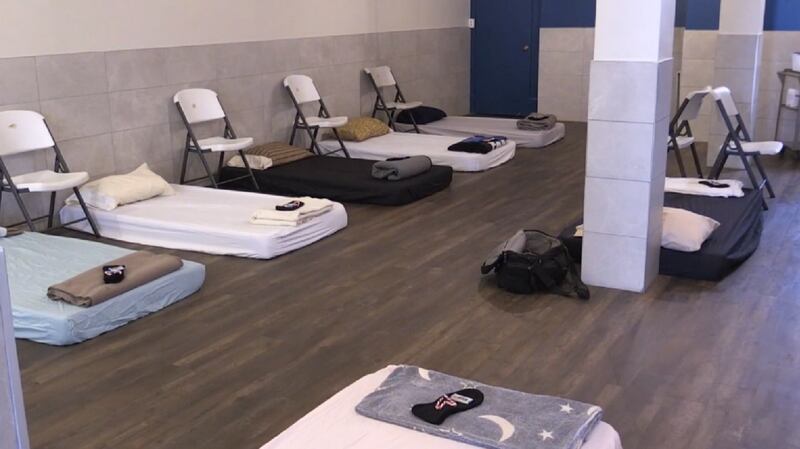
A total of 50 overnight spaces this winter (across three locations) will immediately cease.
The Ark had operated London’s only seven day-a-week open door emergency service outside regular business hours.
Services at 696 Dundas St. will be reduced from between 20 and 24 hours a day — to just four hours.
“We’re currently stepping everything down, starting with the night beds for winter. We will then reduce our daytime hours and by the end of the month, we’ll have just four hours each day,” Campbell explained.
Those remaining hours will be around dinner time.
“We have anywhere between 50 to 70 people through the doors at any one time, and on an average weekend we’re seeing 400 unique individuals come through our space because on Saturdays, Sundays and holidays there are no other open doors,” Campbell added.
Shelter beds inside Ark Aid Street Mission at 696 Dundas St. in London, Ont. (File)
Twelve referral organizations had been utilizing The Ark as a drop-off location for homeless individuals, including London police and local hospitals.
Campbell is disappointed that no other government funding was made available before the previous federal program expired March 31.
“If we have zero government dollars, how do we make sure that we show up for the people who need us, when they need us most?” she asked rhetorically.
Among the other services lost or significantly reduced:
24/7 assessment and stabilization
Encampment meal service
Basic needs access reduced to five days/week
Diversion and pathway-to-home supports
“These are essential basic needs, but they’re also life saving activities,” Campbell explained. “We don’t allow any drug use on site, but we do have overdoses around our building regularly. In fact, we’ve responded to 29 overdoses just since January, so being present here is critical.”
Ark Aid Street Mission is issuing an urgent plea to donors and all levels of government.
“We would like the funding gap filled by the municipal government because that’s the [level of government] we can go to directly, but it’s not their responsibility alone,” Campbell told CTV News. “It was federal funding that had come to the municipality [that ended], so we’re advocating to all levels of government.”
Campbell worries that fewer services, resources and indoor spaces will lead to more suffering on the streets of London.
“I don’t think there’s a person in London who doesn’t know that this is a catastrophe,” she said.
The beds inside The Ark’s Cronyn Warner Shelter are not affected by the funding shortfall, but its funding is scheduled to expire in one year.
The near-eviction of a 63-year-old Victoria renter due to missed rent-increase payments brings home the impact of treating housing “as a commodity instead of a home,” says a University of Victoria associate law professor.
Estair Van Wagner said the letter of the law was followed in Mark Plank’s high-profile eviction case, but not the “human rights element.”
“The process of eviction, whether or not it actually results ultimately in the loss of someone’s home, is really traumatizing,” she said in an interview. “We should be building a system where we avoid that at all costs.”
Plank was set to be evicted on Tuesday from his Cook Street Village apartment after he lost a Residential Tenancy Branch hearing that he did not attend.
The self-described computer illiterate had been sent a rental-increase notice, then an initial 10-day eviction notice, via email to an account he does not access without the help of others. His property manager started the eviction process the first month he failed to pay the $24 increase, though his rent payment at the original $828 rate was accepted.
Following advocacy from groups like Together Against Poverty Society and the Victoria Tenants Union, he was able to reach a last-minute agreement to stay in his home.
Van Wagner said many people in situations like Plank’s don’t have the knowledge or confidence to use existing legal protections to help their case. “People will leave at the first instance of being told that they’re evicted without exercising their rights,” she said.
Plank didn’t report the fact that his studio unit had leaky taps and a broken fridge out of fear of jeopardizing his housing, even though a landlord is required by law to fix those issues once they are made aware of them.
“We aren’t providing enough legal education and resources and advocacy to make sure that folks not only know their rights, but feel that they can exercise them,” Van Wagner said.
While the media can highlight cases of so-called “nightmare tenants,” there are more rental units that aren’t being kept to provincial standards than problem tenants, she said.
Ultimately, preventing evictions, particularly for seniors, those with disabilities and others who are vulnerable in society, is the best way to prevent the homelessness crisis in Victoria and elsewhere from getting worse, Van Wagner said.
“The infrastructure around dealing with homelessness is extraordinarily expensive, and it’s expensive both on a very practical level of emergency shelters and services … but also on the long-term health and mental-health impacts it has on folks,” she said.
Van Wagner said better funding of legal services like those offered by TAPS is a good first step.
TAPS lawyer Leila Geggie Hurst said demand for legal help with evictions is extraordinarily high in Victoria, noting her organization’s walk-in capacity for tenancy issues filled up within four minutes on Tuesday morning.
“There used to be a time in the distant past when if a tenant got an eviction notice, they were able to pretty quickly find housing and move elsewhere,” she said.
But now, tenants are more desperate and more willing to fight to stay in their housing because there are fewer affordable options, Geggie Hurst said, adding that the loss of housing often causes a “catastrophic spiral” in someone’s life.
Kaeley Wiseman, a professor at Vancouver Island University’s master of community planning program, said people often assume there’s a safety net for people who are living in aging, cheaper buildings and are displaced for various reasons.
“They assume that people like Mark [Plank] will then get picked up by the non-profit sector,” said Wiseman, who is also principal of Wiser Projects, a non-profit housing development consultancy.
But finding subsidized, non-market housing is getting more difficult “because this provincial budget has axed that safety net,” Wiseman.
Premier David Eby’s government retroactively clawed back hundreds of millions of dollars in the province’s Community Housing Fund in its latest budget, effectively stalling many affordable-housing projects across B.C., including on Vancouver Island, Wiseman said.
The funding crisis in the non-profit construction sector is likely to last for the next decade, and that’s not good when it takes eight to 10 years to build a publicly funded housing project in Canada, she said.
“You can imagine the competition for the units that we have built in the last 15 years … is going to be fierce.”
Wiseman said 15 per cent of housing available in Canada should be non-market, but the actual amount is only around three to four per cent.
“So by cutting all this stuff, Eby has undermined our entire province,” she said.
Life is a collection of chapters, and some of them are undeniably painful to read. There is a popular sentiment that offers profound hope: “Don’t give up because of one bad chapter in your life. Keep going. Your story doesn’t end here.” This wisdom acknowledges that struggle is a part of the narrative, but it insists that it is not the final page. It is a call for resilience, a reminder that identity isn’t fixed by moments of failure or despair.
However, if we apply this metaphor to the crisis of homelessness and addiction on our streets, we must ask ourselves: Are we helping people turn the page, or are we simply buying them a new bookmark while they remain stuck in the same chapter?
The current approach to homelessness is often too passive, too willing to enable stagnation. It can be patronizing to assume that someone in the throes of addiction or living on the streets doesn’t need a hard response. By removing all expectations—by offering housing without requiring sobriety or a commitment to rehabilitation—we risk telling people that they aren’t capable of more . We accept their bad chapter as the whole book.
We need a shift from a handout to a hand up. This means coupling compassion with accountability. It means recognizing that allowing someone to continue using drugs without intervention is not kindness; it is a slow form of surrender . A truly compassionate response says, “Your story doesn’t end in addiction, and it doesn’t end on this street corner.”
Programs that are beginning to see success are those that provide shelter and support, but also demand recovery and work . They enforce rules, ban public camping, and use the leverage of the law to nudge individuals toward treatment. This isn’t about punishment; it’s about instilling the self-worth that comes from meeting expectations .
If we want to help people write a better chapter, we must stop editing around the margins of their misery. We must provide the structure and the hard line in the sand that says giving up is not an option. Because their story—and ours as a community—doesn’t have to end there.
Housing First is an established concept in Finland since more than 15 years thanks to the Y-Foundation as a pioneer. The Y-Foundation was also one of the founding members of the Housing First Europe Hub.
In 2016 the Finish Y-Foundation together with FEANTSA established the Housing First Europe Hub. The Y-Foundation has been a key player in establishing Housing First as the main response to homelessness in Finland. Since 2007 national policies shifted towards reducing long-term homelessness through Housing First programmes.
As a result, in Finland, the utilisation of emergency and temporary accommodations, such as shelters, hostels, and temporary supported housing, has significantly declined. The number of homeless individuals residing in hostels or boarding houses decreased by 76% from 2008 to 2017. This reduction is attributed to the widespread adoption of prevention strategies, the replacement of outdated models of communal supported housing with Housing First and housing-led approaches, which largely replaced emergency shelters.
ARA, the Housing Finance and Development Centre, has also been involved in the implementation of Housing First in Finland since the start through subsidising new and renovated homes as well as giving housing advice to municipalities.
As a result, Finland is one of the only European countries that registers decreasing homelessness numbers. The country’s goal is to end homelessness in Finland all together.
Finland has managed to reduce homelessness in recent years, but homelessness as a phenomenon is still alive and well. The homelessness situation often escalates in the context of social and economic crises.
The Homeless Prevention Program provides portable rent supplements and support services to individuals in identified at-risk groups facing homelessness.
About the program
The Homeless Prevention Program is an initiative aimed at providing individuals in identified at-risk groups facing homelessness with portable rent supplements and support services to help them access rental housing in the private (non-subsidized) housing market.
The rent supplements and support services help recipients access rental housing in the private (non-subsidized) housing market and community-based services.
The Homeless Prevention Program operates, in many instances, as an enhancement to the existing Homeless Outreach Program / Indigenous Homeless Outreach Programs and targets individuals at transition points that put them at greater risk of homelessness.
Cost: None. Services are free.
Am I eligible?
To be eligible, you (or someone you know) are at immediate risk of homelessness. This includes:
Youth transitioning out of foster care
Women who have experienced violence or are at risk of violence
Individuals leaving the correctional or hospital systems
Individuals of Indigenous descent
Age
Rent supplements are for eligible individuals aged 19 years and older
Poverty in the developed world exists as a paradox: affluent nations with vast resources still grapple with systemic inequality, homelessness, and food insecurity.
This reality underscores how poverty is not merely an economic issue but a political one, shaped by policy choices, power dynamics, and the structural forces of capitalism.
While capitalism has driven unprecedented wealth creation, its association with poverty reveals a complex interplay of exploitation, inequality, and insufficient social safeguards.
1. The Structural Roots of Poverty in Capitalist Systems Capitalism’s core mechanism—profit-driven markets—has historically generated prosperity but also entrenched inequality.
In developed nations, poverty persists despite economic growth because wealth concentrates at the top. For instance, the top 10% of earners in the U.S. control 70% of wealth, while the bottom 50% own just 2.6%.
This disparity stems from policies favoring capital over labor, such as tax cuts for corporations and weakened union protections. The decline of unions, from 34% of U.S. workers in the 1950s to 10% today, correlates with stagnating wages and rising precarious work.
Capitalism’s “creative destruction” also perpetuates poverty. Technological advancements and globalization displace workers, while austerity measures—often justified under neoliberal ideologies—slash social safety nets.
For example, post-2008 austerity in Europe increased poverty rates, particularly in Greece and Spain, where public spending on healthcare and education was curtailed.
2. Political Choices: Reinforcing or Alleviating Poverty? Poverty in developed nations is not inevitable but a product of political decisions.
Governments shape economic systems through taxation, labor laws, and welfare programs. The U.S., despite its wealth, has a higher poverty rate (11.6%) than peer nations like France (8.1%), partly due to weaker social transfers.
Countries with robust welfare systems, such as Nordic nations, demonstrate that poverty can be mitigated through progressive taxation and universal healthcare. However, corporate influence often skews policy.
Lobbying by wealthy elites undermines reforms like minimum wage increases or affordable housing initiatives. For example, the 2017 U.S. tax reform disproportionately benefited high earners, exacerbating income gaps.
Similarly, privatization of public services—a hallmark of neoliberal capitalism—shifts costs to individuals, deepening poverty among low-income households.
3. Globalization and Its Discontents Globalization, while boosting aggregate growth, has unevenly distributed benefits. In developed nations, offshoring jobs to low-wage countries decimated manufacturing sectors, leaving communities in “rust belts” like the U.S. Midwest or northern England.
These regions now face entrenched poverty, with limited access to high-skilled employment. Meanwhile, corporate profits soar: Apple’s $394 billion revenue in 2023 starkly contrasts with the 44 million Americans living below the poverty line.
Political globalization—trade agreements and deregulation—often prioritizes corporate interests over workers’ rights. The North American Free Trade Agreement (NAFTA), for instance, displaced U.S. factory workers while enriching multinational firms.
4. Capitalism’s Contradictions: Growth vs. Equity Proponents argue capitalism reduces poverty through innovation and growth. Indeed, extreme poverty globally fell from 94% in 1820 to 9.6% in 2015, largely due to market expansion. Yet, in developed nations, relative poverty—measured against national standards—remains stubborn.
The U.S. federal poverty for a family of 4 is 19 times higher than the global threshold of $2.15 day, yet 37 million Americans still fall short. Critics highlight that capitalism’s focus on profit often neglects human needs.
For example, pharmaceutical companies prioritize lucrative drugs over affordable medicines, leaving millions in debt or untreated 11. Similarly, speculative housing markets in cities like London and San Francisco price out low-income residents, fueling homelessness.
5. Pathways to Reform: Reimagining Capitalism Addressing poverty in developed nations requires rebalancing capitalism with equity-driven policies:
• Wealth Redistribution: A 1% tax on billionaire wealth could fund global poverty eradication.
• Labor Empowerment: Reviving unions and mandating living wages can reduce income inequality.
• Social Safety Nets: Expanding programs like universal childcare and housing subsidies, as seen in Finland, lifts marginalized groups from poverty.
• Green Transitions: A Global Green New Deal could create jobs while combating climate-driven poverty.
Conclusion: A Political Imperative Poverty in the developed world is neither accidental nor natural—it is a political outcome.
Capitalism’s role is dual edged: it generates wealth but distributes it inequitably. Tackling poverty demands dismantling systemic barriers through progressive taxation, corporate accountability, and robust social policies.
As philosopher Lisa Herzog notes, markets prioritize “moneyed desires over unmoneyed needs”. Redirecting this focus toward justice and equity is not just an economic necessity but a moral imperative.
The choice lies with policymakers: perpetuate a system where poverty coexists with opulence or forge a new paradigm where prosperity is shared. The latter path, though fraught, offers the only route to a just society.
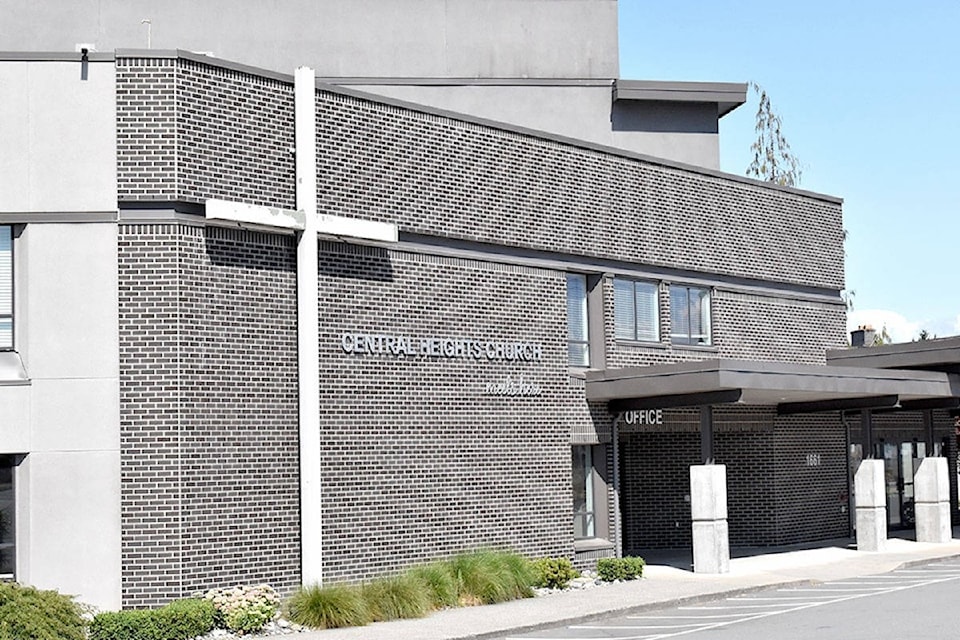
Central Heights Church in Abbotsford is planning a 30-bed emergency shelter for older adults. Ben Lypka/Abbotsford News file
Listen to this article by accessing the above player.
A 30-bed emergency shelter for older adults is being planned at Central Heights Church in Abbotsford.
The plan came before city council on Tuesday afternoon (Feb. 25), when a temporary-use permit and housing agreement were approved.
A staff report to council states that 30 individual “sleeping units” will be provided in an existing building on the church property at 1661 McCallum Rd.
That area at the north end of the building has been operating by Sparrow Community Services Society as a severe weather shelter for older adults.
A letter to the city from BC Housing in September 2024 states that in order to accommodate the emergency shelter, the building will be renovated to include sufficient washroom and shower facilities, accessible entry and operator spaces.
The space is expected to be completed this winter.
The Central Heights Church Shelter will continue to be run by Sparrow – which serves older adults (50+) who are at risk of homelessness – under an agreement with BC Housing.
Support services will be provided 24/7 under the Homelessness Encampment Action Response Temporary Housing (HEARTH) and Homelessness Encampment Action Response Team (HEART) programs.
The staff report to council says a temporary-use permit was required to accommodate the proposed use as it abuts an existing residential use.
The permit will be valid for three years, with the opportunity to request one three-year extension.
The housing agreement includes that the operators must form a good neighbour committee with monthly meetings for the first four months and then on an as-needed basis.
The operators must also provide support services – directly or through referrals – such as life-skills training, counselling and substance-use services.
They must also at least have two staff on site 24/7, and ensure that guests “do not disturb the peace, quiet and enjoyment of the neighbourhood.”
The project has drawn support from Fraser Health and the Abbotsford Police Department, which states that the current services offered at the site have required fewer police resources than comparable facilities.
The city says there are currently 40 encampments and more than 400 unhoused individuals across Abbotsford.
They may be small and swift, but if you notice this tiny silver creature scurrying around your home, you could be facing a significant and costly issue. Experts are advising anyone who spots a silverfish in their property to promptly check for dampness.
These shiny, teardrop-shaped insects thrive in moist conditions and are particularly fond of areas with water.
If you see one darting into or out of your skirting boards or crevices around window sills, it’s likely a sign of damp and moisture within your property. If not addressed, dampness can lead to a host of problems, including cracked bricks, rotting joists, decaying plaster, and spreading mould spores. In extreme cases, it can even compromise the structural integrity of the property and impact air quality.
Dampness can result from various factors, such as leaky drainpipes, condensation, ageing damp proofing, or inadequate ventilation, especially in bathrooms or kitchens where water vapour tends to linger. Identifying the cause can be tricky, but the presence of silverfish indoors usually signals that there’s dampness requiring attention.
Silverfish can be a sign of huge issues -Credit:Getty
The sooner signs of dampness are detected, the easier it will be to eradicate the bugs. It recommends looking for indications on walls like wet or damp patches, peeling wallpaper, and flaking plaster.
Other telltale signs include damp and musty smells, rotting wood, and the emergence of mould and mildew on walls, floors, or ceilings.
Among the proposed remedies are utilising a dehumidifier, maintaining good ventilation in your home, inspecting your gutters for leaks, applying damp-proof paint to your walls and, if necessary, engaging a professional to address areas impacted by rising dampness.
A slumlord is a derogatory term used to describe a landlord who knowingly maintains rental properties in poor or unsafe conditions, often while charging high rents. Slumlords typically neglect necessary repairs, ignore health and safety codes, and exploit tenants, often those in low-income or vulnerable situations who have limited housing options.
Characteristics of a Slumlord:
Poor Property Maintenance: Failing to address issues like leaky roofs, broken heating systems, mold, pest infestations, or structural problems.
Health and Safety Violations: Ignoring building codes, fire safety regulations, or sanitation standards.
Exploitation of Tenants: Charging high rents for substandard housing, often targeting tenants who lack the resources or knowledge to advocate for themselves.
Lack of Responsiveness: Ignoring tenant complaints or requests for repairs.
Illegal Practices: Engaging in unethical or illegal activities, such as wrongful evictions, rent gouging, or refusing to return security deposits.
The Shifting Sands of the Hourglass of World States, is there a Fourth World?
Legal Context in Canada and the US:
Both Canada and the US have laws and regulations to protect tenants from slumlords, but enforcement varies by region.
Canada: Provincial and territorial laws govern rental housing. Tenants can file complaints with local housing authorities or tenant boards if landlords fail to meet their obligations. For example, in Ontario, the Residential Tenancies Act outlines landlord responsibilities, and tenants can seek recourse through the Landlord and Tenant Board.
US: Housing regulations are enforced at the state and local levels. Tenants can report violations to local housing authorities or take legal action. Many cities have tenant rights organizations that assist renters in dealing with slumlords.
Tenant Rights:
Tenants in both countries have the right to:
Live in a safe and habitable environment.
Request necessary repairs.
Withhold rent or take legal action if the landlord fails to address serious issues.
Be free from retaliation for reporting violations.
Addressing Slumlord Practices:
Document Issues: Tenants should keep records of complaints, repairs, and communication with the landlord.
Report Violations: Contact local housing authorities or tenant advocacy groups.
Legal Action: In severe cases, tenants may sue for damages or force the landlord to make repairs.
Slumlords contribute to the broader issue of housing inequality and the lack of affordable, safe housing in many urban areas. Combating their practices requires stronger enforcement of housing laws and increased support for tenants.