Click on the Link Below for a Five (5) Page Document From the COH – Housed on https://www.homelesshub.ca/
https://www.homelesshub.ca/sites/default/files/COHhomelessdefinition.pdf


Click on the Link Below for a Five (5) Page Document From the COH – Housed on https://www.homelesshub.ca/
https://www.homelesshub.ca/sites/default/files/COHhomelessdefinition.pdf
Life is a collection of chapters, and some of them are undeniably painful to read. There is a popular sentiment that offers profound hope: “Don’t give up because of one bad chapter in your life. Keep going. Your story doesn’t end here.” This wisdom acknowledges that struggle is a part of the narrative, but it insists that it is not the final page. It is a call for resilience, a reminder that identity isn’t fixed by moments of failure or despair.
However, if we apply this metaphor to the crisis of homelessness and addiction on our streets, we must ask ourselves: Are we helping people turn the page, or are we simply buying them a new bookmark while they remain stuck in the same chapter?
The current approach to homelessness is often too passive, too willing to enable stagnation. It can be patronizing to assume that someone in the throes of addiction or living on the streets doesn’t need a hard response. By removing all expectations—by offering housing without requiring sobriety or a commitment to rehabilitation—we risk telling people that they aren’t capable of more . We accept their bad chapter as the whole book.
We need a shift from a handout to a hand up. This means coupling compassion with accountability. It means recognizing that allowing someone to continue using drugs without intervention is not kindness; it is a slow form of surrender . A truly compassionate response says, “Your story doesn’t end in addiction, and it doesn’t end on this street corner.”
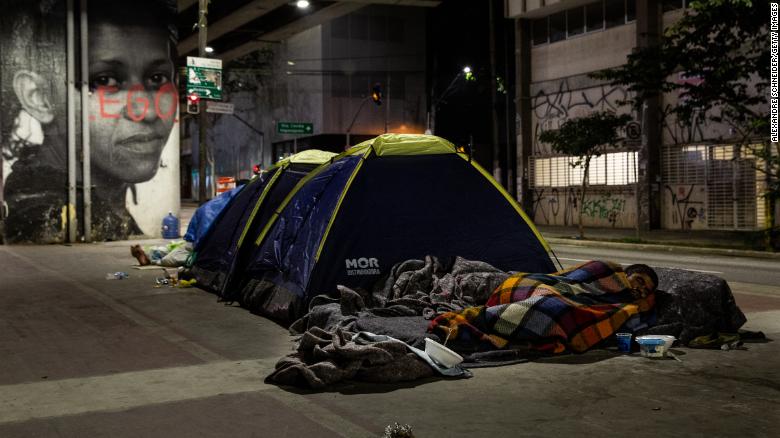
Programs that are beginning to see success are those that provide shelter and support, but also demand recovery and work . They enforce rules, ban public camping, and use the leverage of the law to nudge individuals toward treatment. This isn’t about punishment; it’s about instilling the self-worth that comes from meeting expectations .
If we want to help people write a better chapter, we must stop editing around the margins of their misery. We must provide the structure and the hard line in the sand that says giving up is not an option. Because their story—and ours as a community—doesn’t have to end there.
follow us on Facebook: The Effort of Investment Will Save Faith’s Message Sent
The Homeless Prevention Program provides portable rent supplements and support services to individuals in identified at-risk groups facing homelessness.
The Homeless Prevention Program is an initiative aimed at providing individuals in identified at-risk groups facing homelessness with portable rent supplements and support services to help them access rental housing in the private (non-subsidized) housing market.
The rent supplements and support services help recipients access rental housing in the private (non-subsidized) housing market and community-based services.
The Homeless Prevention Program operates, in many instances, as an enhancement to the existing Homeless Outreach Program / Indigenous Homeless Outreach Programs and targets individuals at transition points that put them at greater risk of homelessness.
Cost: None. Services are free.
To be eligible, you (or someone you know) are at immediate risk of homelessness. This includes:
If you are eligible and approved, the rent supplement can assist with:
You cannot use the rent supplement for:
Please contact an outreach worker for full details. An outreach worker will be able to determine what you are eligible for.
Contact a Homeless Prevention Program Service Provider or go to the nearest Emergency Shelter and ask to speak to staff.
Outreach staff will ask a few questions about your situation and income to determine your eligibility.
Note: Rental supplements are intended to be temporary.
Originally published on the British Columbia Housing Program website.
Dealing with a slumlord can be incredibly frustrating and stressful, but there are steps you can take to protect your rights and improve your living situation. Here’s a guide to help you navigate the situation:
1. Know Your Rights
2. Document Everything
3. Communicate with Your Landlord
4. Report Code Violations

5. Withhold Rent or Repair and Deduct
6. Join or Organize with Other Tenants
7. Seek Legal Help
8. Consider Moving
9. Report to Local Media
10. Stay Safe
Resources to Help You:
By taking these steps, you can hold your landlord accountable and work toward a safer, healthier living environment.
Criticisms of Slumlords as a Blight:
Systemic Context:

Conclusion:
Slumlords are primarily a blight, exacerbating poverty and inequality through exploitation and neglect. While they may fill a temporary gap in housing supply, their practices harm individuals and communities. Addressing the issue requires systemic solutions:
Ultimately, the existence of slumlords underscores the need for structural reforms rather than tolerating exploitative stopgaps.
slumlords provide affordable housing. In many cities, there’s a shortage of affordable housing, so even if the housing is substandard, it might be the only option for low-income individuals or families. Without these slumlords, maybe there would be even fewer options, leading to homelessness. But then, the counterargument is that the conditions in these properties are terrible, possibly violating health and safety codes. So even if it’s affordable, is it acceptable for people to live in such conditions?
You’ve highlighted a critical tension in the debate about slumlords and affordable housing: the trade-off between availability and quality. Let’s break this down further:
The Argument That Slumlords Provide Affordable Housing:
The Counterargument: Unacceptable Living Conditions:
The Broader Systemic Issue:
The existence of slumlords is a symptom of deeper systemic failures:
Is It Acceptable?
While slumlords may provide a temporary solution to housing shortages, the conditions they offer are fundamentally unacceptable. Affordable housing should not come at the cost of health, safety, or dignity. The solution lies in addressing the root causes of the problem:
In conclusion, while slumlords may fill a gap in the short term, their existence is a symptom of systemic failures that need to be addressed. Affordable housing should not mean substandard housing, and society must strive to provide safe, dignified living conditions for all.
Posted January 30, 2025 6:34 pm.
Last Updated January 30, 2025 7:07 pm.
The BC Civil Liberties Association (BCCLA) says it is taking the City of Vancouver to court on behalf of unhoused people affected by a ban on daytime shelters.
Calling the ban “cruel, dehumanizing, and deadly,” the association is challenging the city bylaws that make it illegal for unhoused people to shelter outdoors during the day.
“Unhoused people deserve to have their government treat them with dignity and respect,” the BCCLA said. “Instead, many municipalities choose to enforce bans on daytime sheltering with callous cruelty by forcing people to either carry their belongings around all day or be violently decamped if they try to shelter.”
According to the group, unhoused people in Vancouver are subject to constant harassment, surveillance, and violence. In its enforcement of the ban, the association says, the city engages in daily street sweeps that destroy people’s personal belongings, including tents, sleeping bags, and medications.
Also read:
The city’s website says unhoused people are permitted to set up temporary shelters in parks from dusk to dawn but they must be removed at sunrise “to make parks available to support the health and well-being of the whole community.”
In a statement, the city says it can’t comment on matters before the courts, but confirmed staff will review the legal documentation once it is received.
The liberties association says it is “impossible” for those with physical or mental disabilities to set up and take down their shelter daily and then carry it throughout the day.
Jason Rondeau, one of the plaintiffs, was living on the streets for five years until recently when he got into social housing in the Downtown Eastside.
“For myself, it’s not really affecting me anymore because I am housed now,” Rondeau said.
“But I’ve got a lot of friends out there who are still in the thick of it, and their life is hard. Without the sweeps, their life is already hard.”
Vibert Jack, litigation director for the BCCLA, says the lawsuit will also address city bylaws that govern tents on the sidewalk.
“The courts have said already that these types of bylaws are unenforceable at night because it makes it impossible for people to sleep overnight in shelter,” Jack said.
“Our position is the same logic applies during the day.”
For three years, CRAB Park in Vancouver’s Downtown Eastside was the only place in the city where unhoused people could legally camp in the daytime. This was closed late last year.
Now if you’re an unhoused person and you want to camp overnight in a Vancouver Park, you have to take down your tent every morning at 8 a.m.
In its claim, the BCCLA says the daytime shelter ban violates three separate sections of the Charter of Rights and Freedoms, in that it subjects citizens to “extreme cruelty,” puts peoples’ safety, security, and survival at risk, and threatens equality rights of diverse people, including those with disabilities.
With files from Kier Junos and The Canadian Press.
Originally published on Vancouver City News’ Online site.
Authored By: Emma Crawford