Click on the Link Below for a Five (5) Page Document From the COH – Housed on https://www.homelesshub.ca/
https://www.homelesshub.ca/sites/default/files/COHhomelessdefinition.pdf


Click on the Link Below for a Five (5) Page Document From the COH – Housed on https://www.homelesshub.ca/
https://www.homelesshub.ca/sites/default/files/COHhomelessdefinition.pdf
Life is a collection of chapters, and some of them are undeniably painful to read. There is a popular sentiment that offers profound hope: “Don’t give up because of one bad chapter in your life. Keep going. Your story doesn’t end here.” This wisdom acknowledges that struggle is a part of the narrative, but it insists that it is not the final page. It is a call for resilience, a reminder that identity isn’t fixed by moments of failure or despair.
However, if we apply this metaphor to the crisis of homelessness and addiction on our streets, we must ask ourselves: Are we helping people turn the page, or are we simply buying them a new bookmark while they remain stuck in the same chapter?
The current approach to homelessness is often too passive, too willing to enable stagnation. It can be patronizing to assume that someone in the throes of addiction or living on the streets doesn’t need a hard response. By removing all expectations—by offering housing without requiring sobriety or a commitment to rehabilitation—we risk telling people that they aren’t capable of more . We accept their bad chapter as the whole book.
We need a shift from a handout to a hand up. This means coupling compassion with accountability. It means recognizing that allowing someone to continue using drugs without intervention is not kindness; it is a slow form of surrender . A truly compassionate response says, “Your story doesn’t end in addiction, and it doesn’t end on this street corner.”
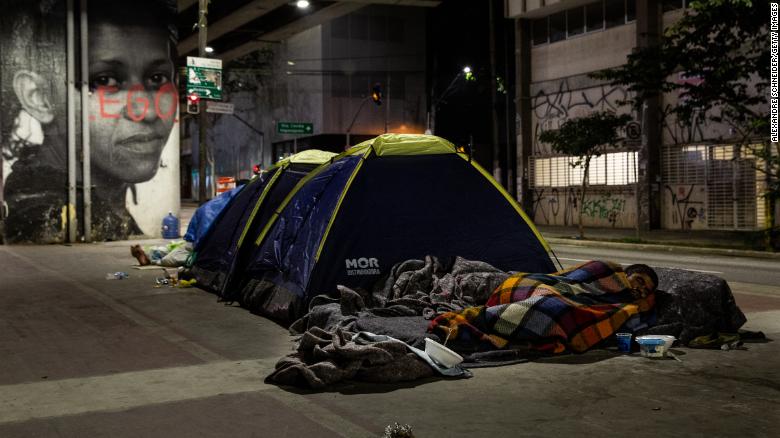
Programs that are beginning to see success are those that provide shelter and support, but also demand recovery and work . They enforce rules, ban public camping, and use the leverage of the law to nudge individuals toward treatment. This isn’t about punishment; it’s about instilling the self-worth that comes from meeting expectations .
If we want to help people write a better chapter, we must stop editing around the margins of their misery. We must provide the structure and the hard line in the sand that says giving up is not an option. Because their story—and ours as a community—doesn’t have to end there.
follow us on Facebook: The Effort of Investment Will Save Faith’s Message Sent
Housing First is an established concept in Finland since more than 15 years thanks to the Y-Foundation as a pioneer. The Y-Foundation was also one of the founding members of the Housing First Europe Hub.
In 2016 the Finish Y-Foundation together with FEANTSA established the Housing First Europe Hub. The Y-Foundation has been a key player in establishing Housing First as the main response to homelessness in Finland. Since 2007 national policies shifted towards reducing long-term homelessness through Housing First programmes.
As a result, in Finland, the utilisation of emergency and temporary accommodations, such as shelters, hostels, and temporary supported housing, has significantly declined. The number of homeless individuals residing in hostels or boarding houses decreased by 76% from 2008 to 2017. This reduction is attributed to the widespread adoption of prevention strategies, the replacement of outdated models of communal supported housing with Housing First and housing-led approaches, which largely replaced emergency shelters.
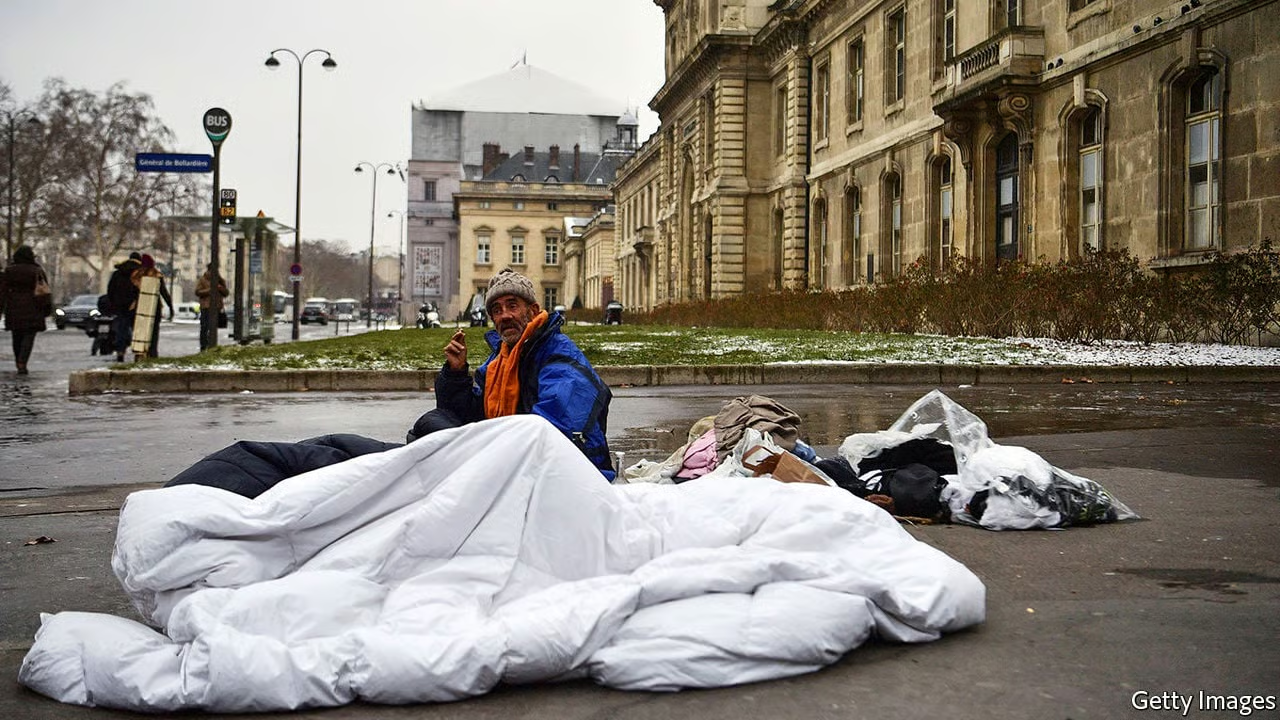
ARA, the Housing Finance and Development Centre, has also been involved in the implementation of Housing First in Finland since the start through subsidising new and renovated homes as well as giving housing advice to municipalities.
As a result, Finland is one of the only European countries that registers decreasing homelessness numbers. The country’s goal is to end homelessness in Finland all together.
Finland has managed to reduce homelessness in recent years, but homelessness as a phenomenon is still alive and well. The homelessness situation often escalates in the context of social and economic crises.
Originally Published on https://housingfirsteurope.eu/country/finland/
Poor people in Canada pay for funerals through provincial social assistance programs (like BC’s Ministry of Social Development or Ontario Works), the federal Canada Pension Plan (CPP) Death Benefit.
Many today are choosing simpler, lower-cost options like direct cremation, with funeral homes often guiding families through these limited financial resources. Government aid covers basic services, but often falls short of average funeral costs, requiring families to supplement or choose minimal arrangements.

Work with Funeral Homes: Funeral directors are familiar with these programs and guide families to choose services within the available budget.
Ministry Pays the Funeral Home: If approved, the ministry pays the funeral home directly for approved services, which may cover cremation or burial and other basic costs.
Peace to All and Best Wishes to All in the New Year of Life and it’s passing encounters.
theurbansurvivor.org
Getting a loan without a job can be challenging, but it’s not impossible. Lenders typically look for a stable source of income to ensure you can repay the loan. However, if you don’t have a job, you may still qualify for a loan if you can demonstrate other sources of income or assets. Here are some options to consider:
If you don’t have a traditional job, you may still have income from other sources. Lenders may accept:
Be prepared to provide documentation, such as bank statements or tax returns, to prove these income sources.
If you have valuable assets, you can apply for a secured loan, which uses collateral to reduce the lender’s risk. Examples include:
Be cautious with secured loans, as you could lose the asset if you fail to repay.

A co-signer with a stable income and good credit can help you qualify for a loan. The co-signer agrees to repay the loan if you can’t, which reduces the lender’s risk. This can be a family member or close friend who trusts you to make payments.
Some credit unions offer Payday Alternative Loans (PALs), which are small, short-term loans designed for borrowers with limited income. These loans typically have lower interest rates than traditional payday loans.
Peer-to-peer lending platforms connect borrowers with individual investors. These platforms may have more flexible requirements than traditional banks. Examples include LendingClub and Prosper.
If traditional lenders aren’t an option, consider asking family or friends for a loan. Be sure to formalize the agreement with a written contract to avoid misunderstandings.
A strong credit score can increase your chances of getting approved for a loan, even without a job. Pay down existing debt, make payments on time, and check your credit report for errors.
Some lenders offer no-income-verification loans, but these often come with high interest rates and fees. Be cautious, as they can lead to a cycle of debt.

If you already have a credit card, you can use it for cash advances or purchases. Alternatively, you may qualify for a new credit card or line of credit based on your credit history.
Some nonprofits and community organizations offer low-interest or no-interest loans to individuals in need. These programs are often designed to help people cover emergency expenses.
If you’re struggling financially, consider reaching out to a financial counselor or nonprofit organization for guidance.

One of the more daunting questions related to astrobiology—the search for life in the cosmos—concerns the nature of life itself. For over a century, biologists have known that life on Earth comes down to the basic building blocks of DNA, RNA, and amino acids. What’s more, studies of the fossil record have shown that life has been subject to many evolutionary pathways leading to diverse organisms. At the same time, there is ample evidence that convergence and constraints play a strong role in limiting the types of evolutionary domains life can achieve.
For astrobiologists, this naturally raises questions about extraterrestrial life, which is currently constrained by our limited frame of reference. For instance, can scientists predict what life may be like on other planets based on what is known about life here on Earth? An international team led by researchers from the Santa Fe Institute (SFI) addressed these and other questions in a recent paper. After considering case studies across various fields, they conclude that certain fundamental limits prevent some life forms from existing.
The research team was led by Ricard Solé, the head of the ICREA-Complex Systems Lab at the Universitat Pompeu Fabra and an External Professor at the Santa Fe Institute (SFI). He was joined by multiple SFI colleagues and researchers from the Institute of Biology at the University of Graz, the Complex Multilayer Networks Lab, the Padua Center for Network Medicine (PCNM), Umeå University, the Massachusetts Institute of Technology (MIT), the Georgia Institute of Technology, the Tokyo Institute of Technology, and the European Centre for Living Technology (ECLT).

The team considered what an interstellar probe might find if it landed on an exoplanet and began looking for signs of life. How might such a mission recognize life that evolved in a biosphere different from what exists here on Earth? Assuming physical and chemical pre-conditions are required for life to emerge, the odds would likely be much greater. However, the issue becomes far more complex when one looks beyond evolutionary biology and astrobiology to consider synthetic biology and bioengineering.
According to Solé and his team, all of these considerations (taken together) come down to one question: can scientists predict what possible living forms of organization exist beyond what we know from Earth’s biosphere? Between not knowing what to look for and the challenge of synthetic biology, said Solé, this presents a major challenge for astrobiologists:
“The big issue is the detection of biosignatures. Detecting exoplanet atmospheres with the proper resolution is becoming a reality and will improve over the following decades. But how do we define a solid criterion to say that a measured chemical composition is connected to life?
“[Synthetic biology] will be a parallel thread in this adventure. Synthetic life can provide profound clues on what to expect and how likely it is under given conditions. To us, synthetic biology is a powerful way to interrogate nature about the possible.”

To investigate these fundamental questions, the team considered case studies from thermodynamics, computation, genetics, cellular development, brain science, ecology, and evolution. They also consider previous research attempting to model evolution based on convergent evolution (different species independently evolve similar traits or behaviors), natural selection, and the limits imposed by a biosphere. From this, said Solé, they identified certain requirements that all lifeforms exhibit:
“We have looked at the most fundamental level: the logic of life across sales, given several informational, physical, and chemical boundaries that seem to be inescapable. Cells as fundamental units, for example, seem to be an expected attractor in terms of structure: vesicles and micelles are automatically formed and allow for the emergence of discrete units.”
The authors also point to historical examples where people predicted some complex features of life that biologists later confirmed. A major example is Erwin Schrödinger’s 1944 book What is Life? in which he predicted that genetic material is an aperiodic crystal—a non-repeating structure that still has a precise arrangement—that encodes information that guides the development of an organism. This proposal inspired James Watson and Francis Crick to conduct research that would lead them to discover the structure of DNA in 1953.
However, said Solé, there is also the work of John von Neumann that was years ahead of the molecular biology revolution. He and his team refer to von Neumann’s “universal constructor” concept, a model for a self-replicating machine based on the logic of cellular life and reproduction. “Life could, in principle, adopt very diverse configurations, but we claim that all life forms will share some inevitable features, such as linear information polymers or the presence of parasites,” Solé summarized.

In the meantime, he added, much needs to be done before astrobiology can confidently predict what forms life could take in our Universe:
“We propose a set of case studies that cover a broad range of life complexity properties. This provides a well-defined road map to developing the fundamentals. In some cases, such as the inevitability of parasites, the observation is enormously strong, and we have some intuitions about why this happens, but not yet a theoretical argument that is universal. Developing and proving these ideas will require novel connections among diverse fields, from computation and synthetic biology to ecology and evolution.”
The team’s paper, “Fundamental constraints to the logic of living systems,” appeared in Interface Focus (a Royal Society publication).
Further Reading: Santa Fe Institute, Interface Focus
Originally Published January 2nd, 2025 at Universe Today.
Authored by: Matt Williams
For a period of more than 150 years, First Nations, Inuit and Métis Nation children were taken from their families and communities to attend schools which were often located far from their homes. More than 150,000 children attended Indian Residential Schools. Many never returned.
The first church-run Indian Residential School was opened in 1831. By the 1880s, the federal government had adopted an official policy of funding residential schools across Canada. The explicit intent was to separate these children from their families and cultures. In 1920, the Indian Act made attendance at Indian Residential Schools compulsory for Treaty-status children between the ages of 7 and 15.
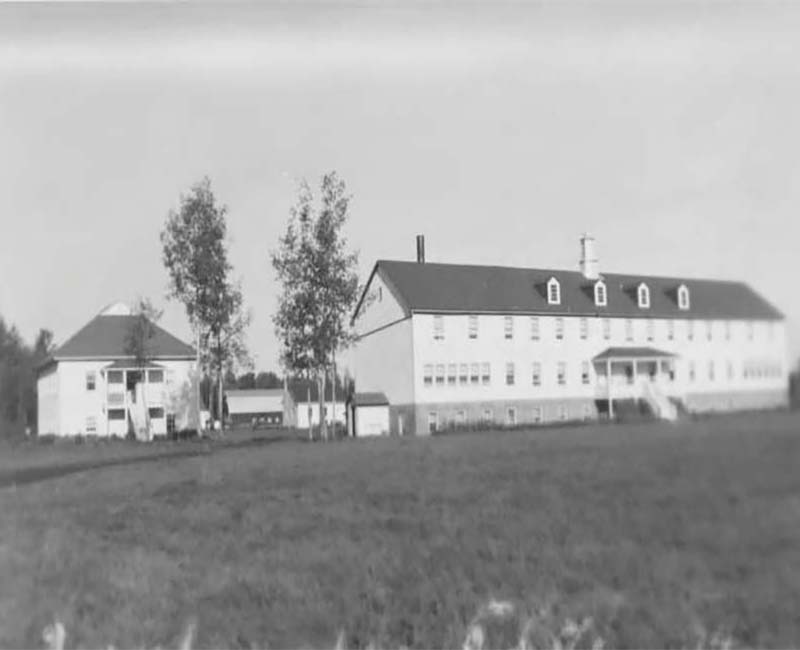
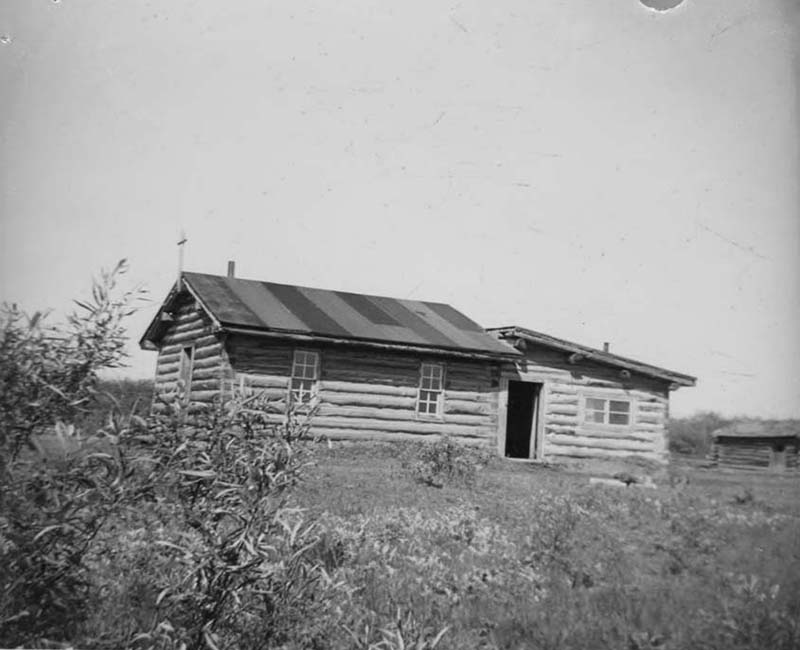
The Truth and Reconciliation Commission of Canada (TRC) concluded that residential schools were “a systematic, government- sponsored attempt to destroy Aboriginal cultures and languages and to assimilate Aboriginal peoples so that they no longer existed as distinct peoples.” The TRC characterized this intent as “cultural genocide.”
The schools were often underfunded and overcrowded. The quality of education was substandard. Children were harshly punished for speaking their own languages. Staff were not held accountable for how they treated the children.
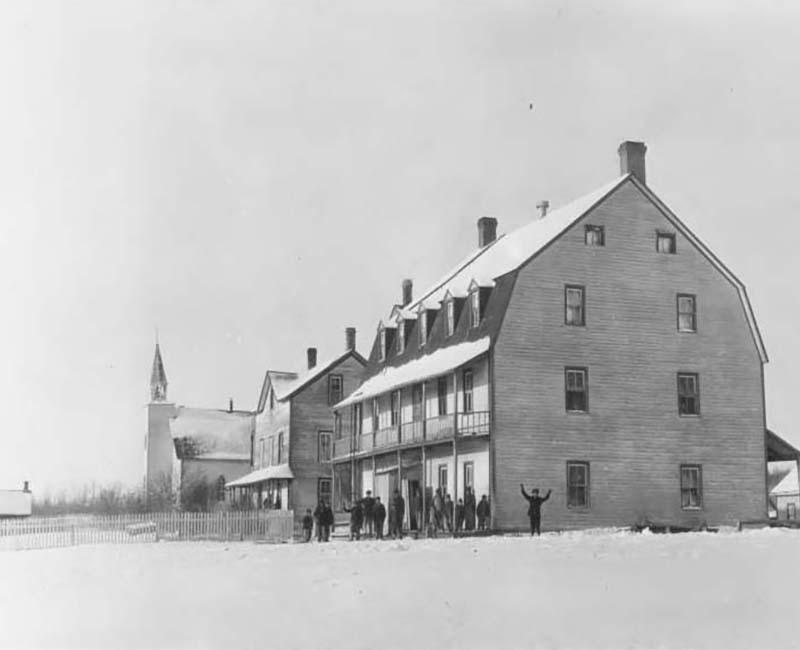
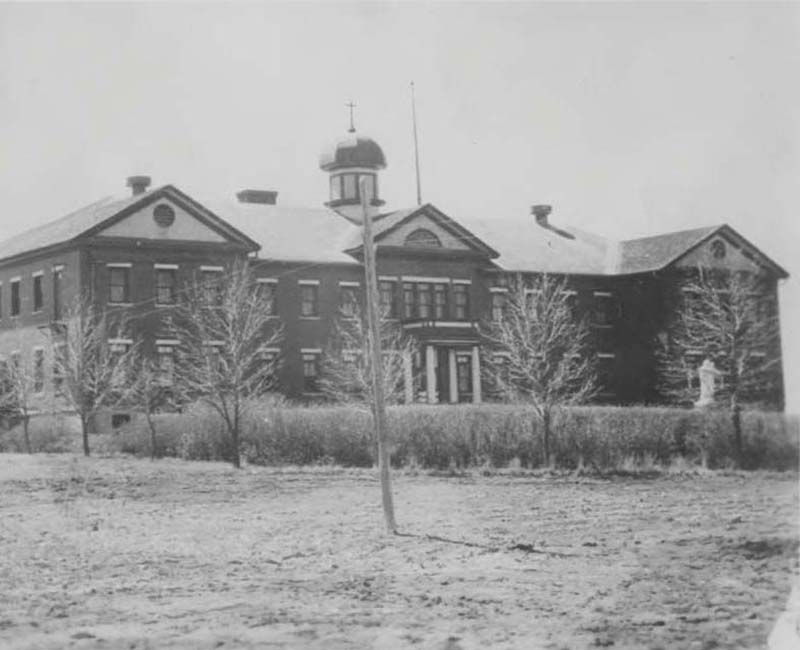
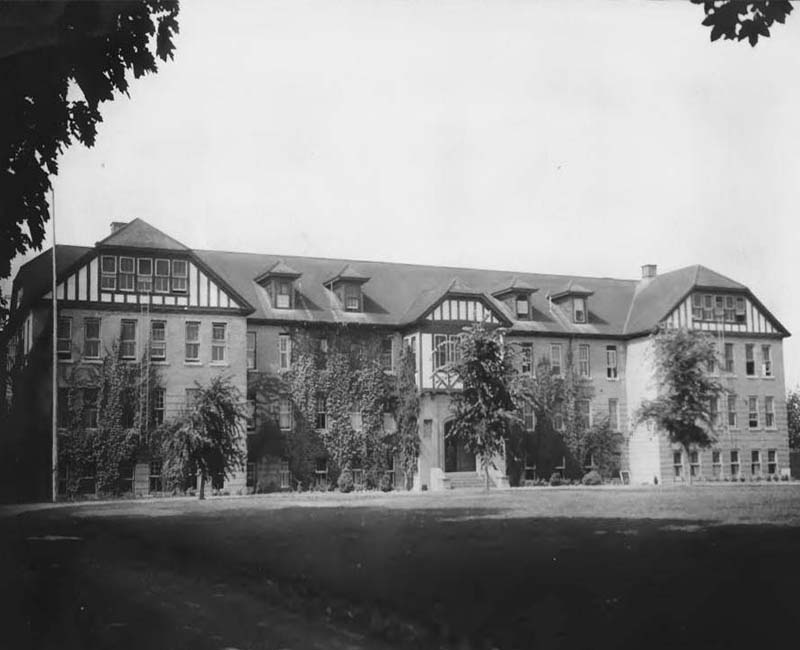
We know that thousands of students suffered physical and sexual abuse at residential schools. All suffered from loneliness and a longing to be home with their families.
The schools hurt the children. The schools also hurt their families and their communities. Children were deprived of healthy examples of love and respect. The distinct cultures, traditions, languages, and knowledge systems of First Nations, Inuit and Métis peoples were eroded by forced assimilation.
The damages inflicted by Residential Schools continue to this day.
For a great many Survivors, talking about their experiences in residential schools means reliving the traumas they experienced. For years, many told no one about what they had endured.
In 1996, the landmark Royal Commission on Aboriginal Peoples drew attention to the lasting harm that was done by the residential schools. A growing number of Survivors and their descendants came forward to tell their stories and demand action.
Through their courage and persistence, an eventual legal settlement was reached between Survivors, the Assembly of First Nations, Inuit representatives and the defendants, the federal government and the churches responsible for the operation of the school. The Indian Residential Schools Settlement Agreement included:
It is important to acknowledge that the Settlement Agreement was not comprehensive. The Métis Nation Survivors were not part of the Settlement Agreement. A separate settlement was reached with Survivors from Newfoundland and Labrador in 2016. A settlement agreement with Survivors of federal Indian Day Schools was not reached until 2019.
The NCTR is carrying on key aspects of the TRC’s work, including safeguarding and adding to the archive of Survivor statements and other records and building a registry of the thousands of children known to have died in residential schools.
In September 2020, Parks Canada announced that Residential Schools had been designated an event of national historical significance. Such designations mark aspects of Canadian history, whether positive or negative, that have had a lasting impact on shaping Canadian society.
The Canadian Parliament passed legislation, Bill C-5, to create a national day of commemoration to honour residential school Survivors and promote understanding of residential school history. The TRC called for such commemoration in its Calls to Action (Call to Action 80). The first National Day for Truth and Reconciliation took place September 30, 2021.
Article Originally in Print online:
https://nctr.ca/education/teaching-resources/residential-school-history/
Reference care of Homeless Hub which also employs a explanatory video: