As you approach the final stage of purchasing your new car from the dealership, you will likely be presented with a wide range of extra-cost items which you may not be prepared for. The business office is the place where the dealership takes a final opportunity to sell you on various add-ons before closing the deal. While some of these options might be worth considering, others are simply not worth the money. It is important to understand what you are being offered in order to make a fully informed purchase decision.
Administration/Documentation Fees – Avoid
Many dealerships will try to charge admin/doc fees anywhere from $299 to $799 as part of the itemized breakdown on the new car purchase agreement. It is important to understand that, unlike delivery and destination or provincial levies, this is not a mandatory fee which all dealerships charge. If possible, ask the dealership to waive this fee from the purchase agreement. Some will be willing to do so in order to close the deal. If the dealer cannot waive the charge, ask for a discount equal to or exceeding the amount of the charge.
Nitrogen Tire Package – Avoid
The idea here is that pure nitrogen helps to maintain consistent air pressure in the tires even through large temperature swings. Given that regular air already contains nearly 80 percent nitrogen, the argument for pure nitrogen is questionable to say the least. In any case, the money spent on this package will have been wasted the next time you fill your tires with regular air. Some dealers charge as much as $400 for this extra, and we recommend passing on it.
Wheel Locks – Avoid
Wheels locking nuts help protect your wheels from potential thieves. For $100 or so, it may be worth the charge on certain cars with fancy wheels, but it offers no value to the average mainstream car, particularly those with steel wheels and hubcaps. Locking nuts can also make tire rotations a major hassle since you have to keep the key in a safe, secure spot.
Window Etching – Avoid
Some dealers will charge up to $500 to etch the car’s VIN into the glass to deter thieves. Again, this is an extra that is not worth its price tag. Most thieves know to look for etching when stealing a car. If you still see value in it, you can purchase a do-it-yourself kit for a modest amount. If the dealer pre-installs etching on their cars and insists on the charge, simply ask for a discount to offset the cost.
Maintenance Plans – Avoid
Maintenance plans allow you to prepay for your car’s maintenance for the first few years of ownership. Although the idea may sound appealing, these plans rarely offer the value they promise. Maintenance plans can cost as much as $2,000 and basically only cover inexpensive items such as oil changes and inspections. With the extended service intervals of today’s cars, the money is better saved for out-of-pocket service visits.
Wheel and Tire Protection – Avoid
Some dealers may offer tire protection for up to $1,000. Tire protection plans are often filled with exclusions, including potholes, curbing, and nail punctures. Without these items being covered, the value of a tire protection package is questionable at best. We recommend passing on this extra.
Rust Protection – Consider
Dealerships typically offer a few options for rust protection, including a spray-on product, wax coating, or even electronic modules which supposedly prevent rust. These products can be priced as high as $1,500 and usually come with some kind of warranty. We recommend skipping the expensive and questionable dealer products and simply go with a time-tested, inexpensive alternative. One solid option is Krown Rust Control, which offers a proven oil spray application that can be very effective when applied on a regular basis. For more details on rust protection, please read this article.
Extended Warranty Plans – Consider
Extended warranty can provide peace of mind and value to those who drive over 20,000 km per year. High mileage drivers are more likely to take advantage of the extra coverage compared to those who only drive 10,000 km per year. An additional 2-3 years of full comprehensive coverage usually costs in the range of $2,500. Less expensive options that only cover the engine and transmission are available as well. It is important to verify that the warranty is a manufacturer plan as opposed to a third party provider. If you are unsure whether you want an extended warranty plan, then wait. You have until the end of the original comprehensive warranty period to decide on this extra.
Lease Protection – Consider
Lease protection is an excellent option to consider for those concerned about returning a car to the dealer at the end of the lease. At a cost of around $1,000, it protects you from potential wear and tear costs, including minor dents or scratches that the dealer could otherwise charge you for. Simply hand over the car and let the dealer deal with those issues.
Paint and Interior Protection – Consider
Dealers often have expensive cosmetic protection products for both exterior paint and interior surfaces. We recommend getting a quote from a reputable independent detailer which may offer far superior products. Vinyl paint protection film, ceramic paint coating, and fabric/leather protectors are all viable options for maintaining the long-term aesthetics of your car. You can even purchase and apply many of these products yourself to save money.
Accessories – Consider
Car accessories such as floor liners, tow packages, dash cams, and remote starters are often best purchased at the dealership. It is important that these items have been approved and tested for your car, and the dealership products will meet this requirement.
Ark Aid Street Mission is sounding the alarm a day after a federal homelessness program and city hall’s cold weather response ended.
Executive Director Sarah Campbell says the financial shortfall will exceed $1 million for the frontline agency, forcing several difficult but necessary service cuts for homeless Londoners.
It represents approximately one-third of their operational funding, and means essential services like meals, showers, clothing, washroom access, assessments, referrals, and system navigation will now rely entirely on donor support.
A total of 50 overnight spaces this winter (across three locations) will immediately cease.
The Ark had operated London’s only seven day-a-week open door emergency service outside regular business hours.
Services at 696 Dundas St. will be reduced from between 20 and 24 hours a day — to just four hours.
“We’re currently stepping everything down, starting with the night beds for winter. We will then reduce our daytime hours and by the end of the month, we’ll have just four hours each day,” Campbell explained.
Those remaining hours will be around dinner time.
“We have anywhere between 50 to 70 people through the doors at any one time, and on an average weekend we’re seeing 400 unique individuals come through our space because on Saturdays, Sundays and holidays there are no other open doors,” Campbell added.
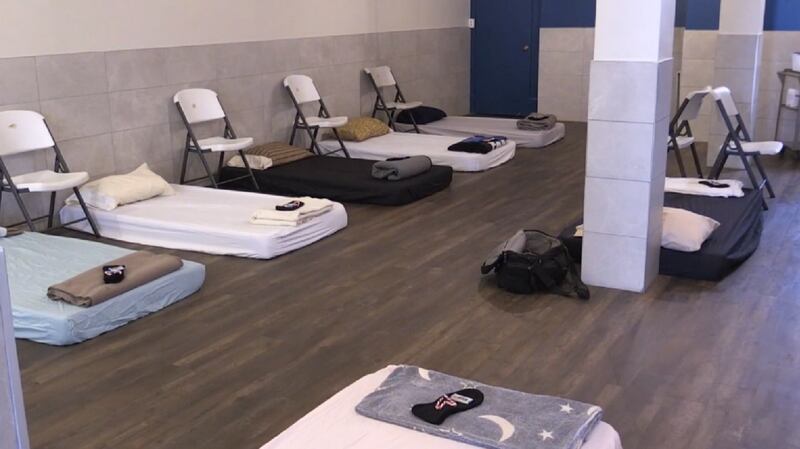
Shelter beds inside Ark Aid Street Mission at 696 Dundas St. in London, Ont. (File)
Twelve referral organizations had been utilizing The Ark as a drop-off location for homeless individuals, including London police and local hospitals.
Campbell is disappointed that no other government funding was made available before the previous federal program expired March 31.
“If we have zero government dollars, how do we make sure that we show up for the people who need us, when they need us most?” she asked rhetorically.
Among the other services lost or significantly reduced:
24/7 assessment and stabilization
Encampment meal service
Basic needs access reduced to five days/week
Diversion and pathway-to-home supports
“These are essential basic needs, but they’re also life saving activities,” Campbell explained. “We don’t allow any drug use on site, but we do have overdoses around our building regularly. In fact, we’ve responded to 29 overdoses just since January, so being present here is critical.”
Ark Aid Street Mission is issuing an urgent plea to donors and all levels of government.
“We would like the funding gap filled by the municipal government because that’s the [level of government] we can go to directly, but it’s not their responsibility alone,” Campbell told CTV News. “It was federal funding that had come to the municipality [that ended], so we’re advocating to all levels of government.”
Campbell worries that fewer services, resources and indoor spaces will lead to more suffering on the streets of London.
“I don’t think there’s a person in London who doesn’t know that this is a catastrophe,” she said.
The beds inside The Ark’s Cronyn Warner Shelter are not affected by the funding shortfall, but its funding is scheduled to expire in one year.
The near-eviction of a 63-year-old Victoria renter due to missed rent-increase payments brings home the impact of treating housing “as a commodity instead of a home,” says a University of Victoria associate law professor.
Estair Van Wagner said the letter of the law was followed in Mark Plank’s high-profile eviction case, but not the “human rights element.”
“The process of eviction, whether or not it actually results ultimately in the loss of someone’s home, is really traumatizing,” she said in an interview. “We should be building a system where we avoid that at all costs.”
Plank was set to be evicted on Tuesday from his Cook Street Village apartment after he lost a Residential Tenancy Branch hearing that he did not attend.
The self-described computer illiterate had been sent a rental-increase notice, then an initial 10-day eviction notice, via email to an account he does not access without the help of others. His property manager started the eviction process the first month he failed to pay the $24 increase, though his rent payment at the original $828 rate was accepted.
Following advocacy from groups like Together Against Poverty Society and the Victoria Tenants Union, he was able to reach a last-minute agreement to stay in his home.
Van Wagner said many people in situations like Plank’s don’t have the knowledge or confidence to use existing legal protections to help their case. “People will leave at the first instance of being told that they’re evicted without exercising their rights,” she said.
Plank didn’t report the fact that his studio unit had leaky taps and a broken fridge out of fear of jeopardizing his housing, even though a landlord is required by law to fix those issues once they are made aware of them.
“We aren’t providing enough legal education and resources and advocacy to make sure that folks not only know their rights, but feel that they can exercise them,” Van Wagner said.
While the media can highlight cases of so-called “nightmare tenants,” there are more rental units that aren’t being kept to provincial standards than problem tenants, she said.
Ultimately, preventing evictions, particularly for seniors, those with disabilities and others who are vulnerable in society, is the best way to prevent the homelessness crisis in Victoria and elsewhere from getting worse, Van Wagner said.
“The infrastructure around dealing with homelessness is extraordinarily expensive, and it’s expensive both on a very practical level of emergency shelters and services … but also on the long-term health and mental-health impacts it has on folks,” she said.
Van Wagner said better funding of legal services like those offered by TAPS is a good first step.
TAPS lawyer Leila Geggie Hurst said demand for legal help with evictions is extraordinarily high in Victoria, noting her organization’s walk-in capacity for tenancy issues filled up within four minutes on Tuesday morning.
“There used to be a time in the distant past when if a tenant got an eviction notice, they were able to pretty quickly find housing and move elsewhere,” she said.
But now, tenants are more desperate and more willing to fight to stay in their housing because there are fewer affordable options, Geggie Hurst said, adding that the loss of housing often causes a “catastrophic spiral” in someone’s life.
Kaeley Wiseman, a professor at Vancouver Island University’s master of community planning program, said people often assume there’s a safety net for people who are living in aging, cheaper buildings and are displaced for various reasons.
“They assume that people like Mark [Plank] will then get picked up by the non-profit sector,” said Wiseman, who is also principal of Wiser Projects, a non-profit housing development consultancy.
But finding subsidized, non-market housing is getting more difficult “because this provincial budget has axed that safety net,” Wiseman.
Premier David Eby’s government retroactively clawed back hundreds of millions of dollars in the province’s Community Housing Fund in its latest budget, effectively stalling many affordable-housing projects across B.C., including on Vancouver Island, Wiseman said.
The funding crisis in the non-profit construction sector is likely to last for the next decade, and that’s not good when it takes eight to 10 years to build a publicly funded housing project in Canada, she said.
“You can imagine the competition for the units that we have built in the last 15 years … is going to be fierce.”
Wiseman said 15 per cent of housing available in Canada should be non-market, but the actual amount is only around three to four per cent.
“So by cutting all this stuff, Eby has undermined our entire province,” she said.
Housing First is an established concept in Finland since more than 15 years thanks to the Y-Foundation as a pioneer. The Y-Foundation was also one of the founding members of the Housing First Europe Hub.
In 2016 the Finish Y-Foundation together with FEANTSA established the Housing First Europe Hub. The Y-Foundation has been a key player in establishing Housing First as the main response to homelessness in Finland. Since 2007 national policies shifted towards reducing long-term homelessness through Housing First programmes.
As a result, in Finland, the utilisation of emergency and temporary accommodations, such as shelters, hostels, and temporary supported housing, has significantly declined. The number of homeless individuals residing in hostels or boarding houses decreased by 76% from 2008 to 2017. This reduction is attributed to the widespread adoption of prevention strategies, the replacement of outdated models of communal supported housing with Housing First and housing-led approaches, which largely replaced emergency shelters.
ARA, the Housing Finance and Development Centre, has also been involved in the implementation of Housing First in Finland since the start through subsidising new and renovated homes as well as giving housing advice to municipalities.
As a result, Finland is one of the only European countries that registers decreasing homelessness numbers. The country’s goal is to end homelessness in Finland all together.
Finland has managed to reduce homelessness in recent years, but homelessness as a phenomenon is still alive and well. The homelessness situation often escalates in the context of social and economic crises.
Poor people in Canada pay for funerals through provincial social assistance programs (like BC’s Ministry of Social Development or Ontario Works), the federal Canada Pension Plan (CPP) Death Benefit.
Many today are choosing simpler, lower-cost options like direct cremation, with funeral homes often guiding families through these limited financial resources. Government aid covers basic services, but often falls short of average funeral costs, requiring families to supplement or choose minimal arrangements.
Government Financial Assistance Provincial Programs: Most provinces have programs, often through social development or welfare ministries, to help with funeral costs if the deceased’s estate and family can’t pay.
British Columbia: The Ministry of Social Development and Poverty Reduction provides assistance, covering basic services, burial/cremation, and interment, working directly with funeral homes.
Ontario: Ontario Works helps cover basic funeral expenses for those in need, with a process involving your local office.
FederalProgram: Canada Pension Plan (CPP) Death Benefit: A one-time payment of $2,500 (a flat rate) is available if the deceased contributed to CPP for a minimum number of years, helping families with costs.
How the Process Works Contact the Ministry: After a death, the legal representative (executor) contacts the provincial ministry (e.g., Social Development) to see if the estate qualifies for assistance.
Work with Funeral Homes: Funeral directors are familiar with these programs and guide families to choose services within the available budget.
Ministry Pays the Funeral Home: If approved, the ministry pays the funeral home directly for approved services, which may cover cremation or burial and other basic costs.
Cost-Saving Options Direct Cremation: This is often the most affordable option, as it avoids embalming, viewing, and elaborate ceremonies. Simplified Services: Choosing basic services (no casket upgrades, flowers, or extensive visitations) keeps costs down.
Challenges Funding Gaps: Government funding often doesn’t cover the full average cost of a funeral, leaving a significant gap for families to fill. Limited Choices: Financial constraints restrict choices, making it hard to provide the send-off families desire.
Peace to All and Best Wishes to All in the New Year of Life and it’s passing encounters.
The Homeless Prevention Program provides portable rent supplements and support services to individuals in identified at-risk groups facing homelessness.
About the program
The Homeless Prevention Program is an initiative aimed at providing individuals in identified at-risk groups facing homelessness with portable rent supplements and support services to help them access rental housing in the private (non-subsidized) housing market.
The rent supplements and support services help recipients access rental housing in the private (non-subsidized) housing market and community-based services.
The Homeless Prevention Program operates, in many instances, as an enhancement to the existing Homeless Outreach Program / Indigenous Homeless Outreach Programs and targets individuals at transition points that put them at greater risk of homelessness.
Cost: None. Services are free.
Am I eligible?
To be eligible, you (or someone you know) are at immediate risk of homelessness. This includes:
Youth transitioning out of foster care
Women who have experienced violence or are at risk of violence
Individuals leaving the correctional or hospital systems
Individuals of Indigenous descent
Age
Rent supplements are for eligible individuals aged 19 years and older
Dental care remains a critical yet often overlooked component of overall health, with millions in Canada and the United States unable to afford basic services. For low-income individuals, the high cost of dental care exacerbates health inequities, perpetuates cycles of poverty, and strains public health systems. This article examines the systemic barriers to affordable oral health care in both countries, highlighting policy gaps, socioeconomic disparities, and the human toll of unmet dental needs.
The Canadian Context: Progress and Persistent Gaps
In Canada, approximately one-third of residents lack dental insurance, and one in four avoid dental visits due to cost, often leading to preventable complications like infections, cardiovascular issues, and diabetes-related problems. Recognizing this crisis, the federal government launched the Canadian Dental Care Plan (CDCP) in 2023, targeting uninsured households earning under 90,000 its phased rollout has left gaps. For example, adults aged 18–64 must wait until 2025 to apply, prolonging financial strain for many.
Despite these efforts, challenges persist. The CDCP’s “payer of last resort” model does not fully address accessibility barriers, such as rural “dental deserts” or provider shortages in marginalized communities. Additionally, Canada’s reliance on employer-sponsored insurance—covering 76% of insured individuals—leaves low-income workers, gig economy employees, and Indigenous populations disproportionately uninsured.
The U.S. Crisis: A Landscape of Inequity
In the U.S., over 76.5 million Americans lack dental insurance, with disparities starkly divided along racial and economic lines 5. Black and Hispanic adults are 68% and 52% more likely, respectively, to have unmet dental needs compared to white Americans, while rural residents face severe provider shortages—Alaska, Montana, and North Dakota have the highest rates of “dental deserts”. Medicaid, the primary safety net, often limits adult coverage to emergency extractions, leaving preventive care inaccessible. Even insured individuals face high deductibles and annual caps, forcing many to delay treatment until crises arise.
The consequences are dire. Poor oral health contributes to lost productivity (4.15 million workdays missed annually) and unnecessary emergency room visits, costing the U.S. healthcare system $1.8 billion in 2017 alone. Vulnerable groups, including veterans and low-income families, endure higher rates of periodontal disease and tooth loss, further entrenching health inequities.
Structural Barriers and Systemic Failures
Both nations grapple with systemic issues that compound affordability challenges:
Geographic Disparities: Rural areas in the U.S. and Canada suffer from dentist shortages, with rural Canada relying on fly-in clinics and the U.S. facing a ratio of one dentist per 3,850 rural residents.
Racial and Economic Inequities: Marginalized communities, including immigrants and people of color, face discrimination, language barriers, and limited access to culturally competent care.
Policy Limitations: Canada’s CDCP excludes those with employer insurance, while the U.S. lacks a federal dental program, relying on fragmented state-level Medicaid policies.
Toward Equitable Solutions
Addressing this crisis requires bold policy reforms. Canada’s CDCP, though imperfect, represents a step toward universal coverage, but advocates argue for a federally funded agency to standardize care and close gaps. In the U.S., expanding Medicaid dental benefits and incentivizing providers to work in underserved areas could mitigate disparities. Both nations must prioritize integrating oral health into primary care and addressing social determinants like poverty and education.
Conclusion
The unaffordability of dental care in North America is not merely a health issue but a moral failing. While Canada’s CDCP offers hope, its success hinges on addressing accessibility and inclusivity. In the U.S., systemic overhaul is urgently needed to ensure oral health is treated as a fundamental right. Until then, millions will continue to suffer needlessly, their pain a testament to the enduring divide between privilege and poverty.
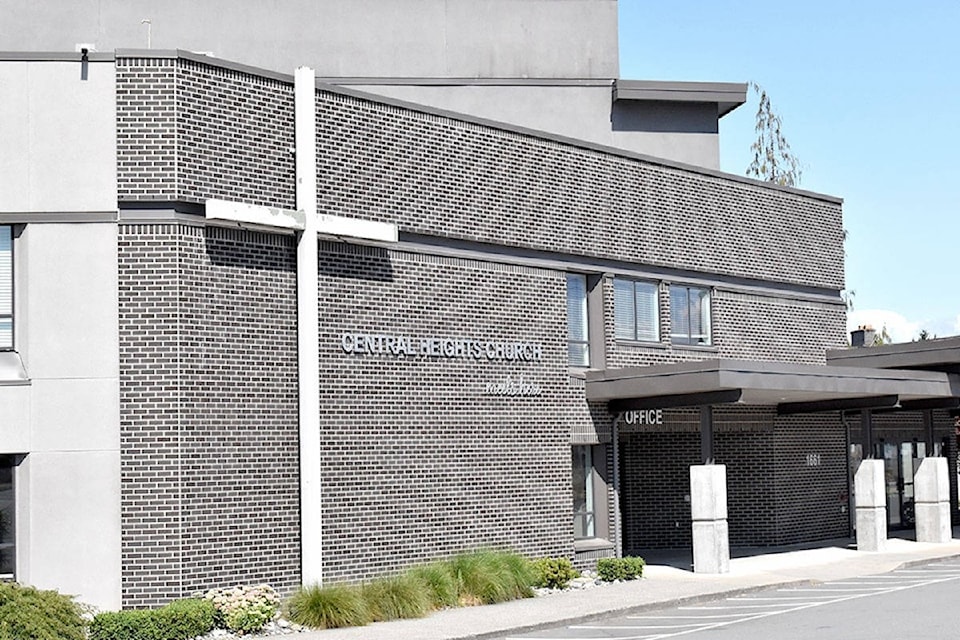
Central Heights Church in Abbotsford is planning a 30-bed emergency shelter for older adults. Ben Lypka/Abbotsford News file
Listen to this article by accessing the above player.
A 30-bed emergency shelter for older adults is being planned at Central Heights Church in Abbotsford.
The plan came before city council on Tuesday afternoon (Feb. 25), when a temporary-use permit and housing agreement were approved.
A staff report to council states that 30 individual “sleeping units” will be provided in an existing building on the church property at 1661 McCallum Rd.
That area at the north end of the building has been operating by Sparrow Community Services Society as a severe weather shelter for older adults.
A letter to the city from BC Housing in September 2024 states that in order to accommodate the emergency shelter, the building will be renovated to include sufficient washroom and shower facilities, accessible entry and operator spaces.
The space is expected to be completed this winter.
The Central Heights Church Shelter will continue to be run by Sparrow – which serves older adults (50+) who are at risk of homelessness – under an agreement with BC Housing.
Support services will be provided 24/7 under the Homelessness Encampment Action Response Temporary Housing (HEARTH) and Homelessness Encampment Action Response Team (HEART) programs.
The staff report to council says a temporary-use permit was required to accommodate the proposed use as it abuts an existing residential use.
The permit will be valid for three years, with the opportunity to request one three-year extension.
The housing agreement includes that the operators must form a good neighbour committee with monthly meetings for the first four months and then on an as-needed basis.
The operators must also provide support services – directly or through referrals – such as life-skills training, counselling and substance-use services.
They must also at least have two staff on site 24/7, and ensure that guests “do not disturb the peace, quiet and enjoyment of the neighbourhood.”
The project has drawn support from Fraser Health and the Abbotsford Police Department, which states that the current services offered at the site have required fewer police resources than comparable facilities.
The city says there are currently 40 encampments and more than 400 unhoused individuals across Abbotsford.
Dealing with a slumlord can be incredibly frustrating and stressful, but there are steps you can take to protect your rights and improve your living situation. Here’s a guide to help you navigate the situation:
1. Know Your Rights
Familiarize yourself with local tenant laws and housing codes. These vary by location but generally guarantee your right to a safe and habitable living environment.
Common landlord responsibilities include providing:
Working utilities (heat, water, electricity).
Proper sanitation and waste disposal.
Structural integrity (no leaks, mold, or pest infestations).
Safe and secure locks on doors and windows.
If your landlord is failing to meet these standards, they may be violating the law.
2. Document Everything
Keep a detailed record of all issues, including:
Photos and videos of unsafe or unsanitary conditions.
Written notes about when problems started and how they’ve been ignored.
Copies of all communication with your landlord (emails, texts, letters, etc.).
This documentation will be critical if you need to take legal action or report the landlord.
3. Communicate with Your Landlord
Notify your landlord in writing about the issues and request repairs. Be specific, polite, and keep a copy of the letter or email.
If they don’t respond or refuse to make repairs, send a follow-up notice and mention your legal rights.
4. Report Code Violations
Contact your local housing authority, health department, or building code enforcement agency to report unsafe or unsanitary conditions.
An inspector may visit your property and issue a violation notice to the landlord, forcing them to make repairs.
Pittsburgh, Pennsylvania, USA – Some abandoned townhouses standing in Uptown district
5. Withhold Rent or Repair and Deduct
In some areas, tenants are allowed to withhold rent or pay for repairs themselves and deduct the cost from rent. However, this can be risky, so:
Check your local laws to ensure this is allowed.
Notify your landlord in writing before taking action.
Keep receipts and documentation for all repairs.
6. Join or Organize with Other Tenants
If other tenants are experiencing similar issues, consider organizing as a group. Landlords are more likely to respond to collective action.
You can also reach out to local tenant unions or advocacy groups for support.
7. Seek Legal Help
If your landlord continues to neglect their responsibilities, consult a tenant attorney or legal aid organization.
You may be able to:
Sue for damages or compensation.
Break your lease without penalty.
Force the landlord to make repairs through a court order.
8. Consider Moving
If the situation doesn’t improve and your health or safety is at risk, it may be best to find a new place to live.
Before moving, ensure you’re not violating your lease and that you’ve followed proper legal procedures to protect yourself from retaliation or eviction.
9. Report to Local Media
If the situation is severe and widespread, contacting local news outlets can bring attention to the issue and pressure the landlord to act.
10. Stay Safe
If you feel threatened or unsafe due to your landlord’s actions, contact local law enforcement or a tenant advocacy group immediately.
Resources to Help You:
Local Housing Authority: For reporting code violations or unsafe conditions.
Legal Aid Organizations: For free or low-cost legal advice.
Tenant Unions: For advocacy and support in organizing with other tenants.
State or Local Tenant Rights Websites: For information on your specific rights.
By taking these steps, you can hold your landlord accountable and work toward a safer, healthier living environment.