Originally Published on Vancouver’s City News Website
Protest in Vancouver, British Columbia Against Residential Tenancy Branch Ruling Involved with Eviction Proceeding of March 31st, 2025
Featured
Reply

Posted January 30, 2025 6:34 pm.
Last Updated January 30, 2025 7:07 pm.
The BC Civil Liberties Association (BCCLA) says it is taking the City of Vancouver to court on behalf of unhoused people affected by a ban on daytime shelters.
Calling the ban “cruel, dehumanizing, and deadly,” the association is challenging the city bylaws that make it illegal for unhoused people to shelter outdoors during the day.
“Unhoused people deserve to have their government treat them with dignity and respect,” the BCCLA said. “Instead, many municipalities choose to enforce bans on daytime sheltering with callous cruelty by forcing people to either carry their belongings around all day or be violently decamped if they try to shelter.”
According to the group, unhoused people in Vancouver are subject to constant harassment, surveillance, and violence. In its enforcement of the ban, the association says, the city engages in daily street sweeps that destroy people’s personal belongings, including tents, sleeping bags, and medications.
Also read:
The city’s website says unhoused people are permitted to set up temporary shelters in parks from dusk to dawn but they must be removed at sunrise “to make parks available to support the health and well-being of the whole community.”
In a statement, the city says it can’t comment on matters before the courts, but confirmed staff will review the legal documentation once it is received.
The liberties association says it is “impossible” for those with physical or mental disabilities to set up and take down their shelter daily and then carry it throughout the day.
Jason Rondeau, one of the plaintiffs, was living on the streets for five years until recently when he got into social housing in the Downtown Eastside.
“For myself, it’s not really affecting me anymore because I am housed now,” Rondeau said.
“But I’ve got a lot of friends out there who are still in the thick of it, and their life is hard. Without the sweeps, their life is already hard.”
Vibert Jack, litigation director for the BCCLA, says the lawsuit will also address city bylaws that govern tents on the sidewalk.
“The courts have said already that these types of bylaws are unenforceable at night because it makes it impossible for people to sleep overnight in shelter,” Jack said.
“Our position is the same logic applies during the day.”
For three years, CRAB Park in Vancouver’s Downtown Eastside was the only place in the city where unhoused people could legally camp in the daytime. This was closed late last year.
Now if you’re an unhoused person and you want to camp overnight in a Vancouver Park, you have to take down your tent every morning at 8 a.m.
In its claim, the BCCLA says the daytime shelter ban violates three separate sections of the Charter of Rights and Freedoms, in that it subjects citizens to “extreme cruelty,” puts peoples’ safety, security, and survival at risk, and threatens equality rights of diverse people, including those with disabilities.
With files from Kier Junos and The Canadian Press.
Originally published on Vancouver City News’ Online site.
Authored By: Emma Crawford

One of the more daunting questions related to astrobiology—the search for life in the cosmos—concerns the nature of life itself. For over a century, biologists have known that life on Earth comes down to the basic building blocks of DNA, RNA, and amino acids. What’s more, studies of the fossil record have shown that life has been subject to many evolutionary pathways leading to diverse organisms. At the same time, there is ample evidence that convergence and constraints play a strong role in limiting the types of evolutionary domains life can achieve.
For astrobiologists, this naturally raises questions about extraterrestrial life, which is currently constrained by our limited frame of reference. For instance, can scientists predict what life may be like on other planets based on what is known about life here on Earth? An international team led by researchers from the Santa Fe Institute (SFI) addressed these and other questions in a recent paper. After considering case studies across various fields, they conclude that certain fundamental limits prevent some life forms from existing.
The research team was led by Ricard Solé, the head of the ICREA-Complex Systems Lab at the Universitat Pompeu Fabra and an External Professor at the Santa Fe Institute (SFI). He was joined by multiple SFI colleagues and researchers from the Institute of Biology at the University of Graz, the Complex Multilayer Networks Lab, the Padua Center for Network Medicine (PCNM), Umeå University, the Massachusetts Institute of Technology (MIT), the Georgia Institute of Technology, the Tokyo Institute of Technology, and the European Centre for Living Technology (ECLT).

The team considered what an interstellar probe might find if it landed on an exoplanet and began looking for signs of life. How might such a mission recognize life that evolved in a biosphere different from what exists here on Earth? Assuming physical and chemical pre-conditions are required for life to emerge, the odds would likely be much greater. However, the issue becomes far more complex when one looks beyond evolutionary biology and astrobiology to consider synthetic biology and bioengineering.
According to Solé and his team, all of these considerations (taken together) come down to one question: can scientists predict what possible living forms of organization exist beyond what we know from Earth’s biosphere? Between not knowing what to look for and the challenge of synthetic biology, said Solé, this presents a major challenge for astrobiologists:
“The big issue is the detection of biosignatures. Detecting exoplanet atmospheres with the proper resolution is becoming a reality and will improve over the following decades. But how do we define a solid criterion to say that a measured chemical composition is connected to life?
“[Synthetic biology] will be a parallel thread in this adventure. Synthetic life can provide profound clues on what to expect and how likely it is under given conditions. To us, synthetic biology is a powerful way to interrogate nature about the possible.”

To investigate these fundamental questions, the team considered case studies from thermodynamics, computation, genetics, cellular development, brain science, ecology, and evolution. They also consider previous research attempting to model evolution based on convergent evolution (different species independently evolve similar traits or behaviors), natural selection, and the limits imposed by a biosphere. From this, said Solé, they identified certain requirements that all lifeforms exhibit:
“We have looked at the most fundamental level: the logic of life across sales, given several informational, physical, and chemical boundaries that seem to be inescapable. Cells as fundamental units, for example, seem to be an expected attractor in terms of structure: vesicles and micelles are automatically formed and allow for the emergence of discrete units.”
The authors also point to historical examples where people predicted some complex features of life that biologists later confirmed. A major example is Erwin Schrödinger’s 1944 book What is Life? in which he predicted that genetic material is an aperiodic crystal—a non-repeating structure that still has a precise arrangement—that encodes information that guides the development of an organism. This proposal inspired James Watson and Francis Crick to conduct research that would lead them to discover the structure of DNA in 1953.
However, said Solé, there is also the work of John von Neumann that was years ahead of the molecular biology revolution. He and his team refer to von Neumann’s “universal constructor” concept, a model for a self-replicating machine based on the logic of cellular life and reproduction. “Life could, in principle, adopt very diverse configurations, but we claim that all life forms will share some inevitable features, such as linear information polymers or the presence of parasites,” Solé summarized.

In the meantime, he added, much needs to be done before astrobiology can confidently predict what forms life could take in our Universe:
“We propose a set of case studies that cover a broad range of life complexity properties. This provides a well-defined road map to developing the fundamentals. In some cases, such as the inevitability of parasites, the observation is enormously strong, and we have some intuitions about why this happens, but not yet a theoretical argument that is universal. Developing and proving these ideas will require novel connections among diverse fields, from computation and synthetic biology to ecology and evolution.”
The team’s paper, “Fundamental constraints to the logic of living systems,” appeared in Interface Focus (a Royal Society publication).
Further Reading: Santa Fe Institute, Interface Focus
Originally Published January 2nd, 2025 at Universe Today.
Authored by: Matt Williams
The Canada Disability Benefit (CDB) is set to launch in July 2025 but not much is known about it, yet
(Play Media above to listen to this article)
In July 2025, a new era dawns for Canadians with disabilities. The Canada Disability Benefit (CDB) is set to launch, promising a much-needed financial lifeline for adults aged 18 to 64. It’s a significant shift in how the government approaches disability support, but the devil, as they say, is in the details.
The CDB will offer a maximum annual payment of $2,400 – that’s $200 a month – for the initial period from July 2025 to June 2026. Think of it as a foundational layer, a structured payment designed to ease the crushing financial weight many disabled Canadians carry. It’s a far cry from a silver bullet, however.
——————–
Before the CDB, the landscape was a patchwork quilt of provincial programs and the Canada Pension Plan Disability (CPP-D). While helpful, these existing systems often left individuals struggling.
“It won’t make much of a difference, $200 doesn’t go very far these days,” she adds, “If the government really wants to make a difference in my life and other disabled people they need to turn $200 into $500,” says Rae-Darlene Lavoie, who lives with Multiple Sclerosis and is wheelchair bound.

Many provincial programs are notoriously stingy, imposing restrictive eligibility criteria and offering paltry sums that barely cover the basics. It’s like trying to fill a bathtub with a teaspoon – a Sisyphean task, to say the least.
Amanda MacKenzie, national director of external affairs for March of Dimes Canada, painted a stark picture. She highlighted the pervasive reality of many disabled Canadians living on less than $30,000 annually. This isn’t just a statistic; it’s a reflection of a system that, until now, has fallen short.
The CDB aims for a more equitable, consistent approach, tailoring payments to individual and spousal income. While this is a step in the right direction, critics argue that $200 a month simply isn’t enough to meet the escalating cost of living, especially for those with complex medical needs. The whispers of inadequacy are loud, and advocates are pushing for a substantial increase.
——————–
Service Canada promises detailed application information in Spring 2025. This is good news; clarity is crucial. However, the CDB’s true efficacy hinges on its implementation and the government’s responsiveness to ongoing concerns. Will it alleviate the financial strain, or will it merely offer a palliative, a band-aid on a gaping wound?
The CDB’s arrival coincides with a broader, much-needed conversation about disability rights and financial security. Advocacy groups are pushing for a holistic approach, viewing the CDB as a single piece of a much larger puzzle. They’re clamouring for increased funding for support services, accessible housing, and improved healthcare – all vital components of a truly inclusive society.
The CDB Is both a beacon of hope and a test of the government’s commitment. It’s a starting point, a foundation upon which a more equitable system can be built. But its success depends entirely on continuous dialogue, active listening, and a willingness to adapt and adjust based on the lived experiences of those the benefit is intended to serve.
The journey to true inclusivity is a marathon, not a sprint, and the CDB could mark a significant mile marker, but the race will still be far from over.
Article Originally published by Elliot Lake Today’ Web Site, click here.
Authored by Lisa Rene-de-Cotret, reporter for ElliotLakeToday.com/
Duty to Assist is a homelessness prevention approach that works upstream and uses a human-rights lens. Originating in Wales, it is also known as the Housing (Wales) Act 2014, which created a legal obligation for local authorities, such as governments, to make reasonable efforts to move individuals out of homelessness or stabilize their housing.
The fourth session of the Prevention Matters! series was hosted by Stephen Gaetz from the Canadian Observatory on Homelessness and dug into the details of how Duty to Assist works. Gaetz interviewed Peter Mackie of the Centre for Homelessness Impact at the University of Cardiff who was a key player in the implementation and creation of the Housing (Wales) Act 2014. They discussed the implementation of Duty to Assist in the United Kingdom, as well as challenges faced in the process and what Duty to Assist might look like in the Canadian context.
Individuals affected by homelessness are eligible for assistance at three stages:
Duty to Assist works upstream, meaning that it assists individuals earlier than previous legislation allowed. Those who are at risk of homelessness or have just become homeless can seek out help from local authorities earlier. This allows issues to be addressed in a more timely and cost-effective manner.
According to Mackie, Duty to Assist has proven to be much more effective in the prevention stage. The intervention can be something as simple as paying off arrears or providing first and last month’s rent, which is a much simpler approach than trying to find brand-new accommodation.
“If you are already homeless, to take steps to resolve your homelessness, we’re way less successful there because you don’t have the home to try and keep somebody in.” – Peter Mackie
While the implementation of Duty to Assist is a win for prevention in Wales, the legislation is still riddled with difficulties that go beyond the homelessness sector. As Promise Busulwa, the producer of Prevention Matters! always says in her opening remarks: “The housing crisis cannot be solved by the homelessness sector alone.” Mackie has written articles outlining the need for “…effective universal prevention to be the foundation of any strategy to end homelessness.” Many of the ongoing issues with the Duty to Assist model are the lack of consolidated, systematic care and collaboration between public bodies and other organizations to address the root causes of homelessness.
“But what we don’t have in the legislation is a requirement that, for instance, a landlord would notify the local authority.” – Peter Mackie
Another challenge noted by Mackie is that people can be hesitant to change. Individuals who are impacted by impending or current homelessness, and who therefore qualify for Duty to Assist, need to be aware of the program itself and request assistance. This has proven to be difficult, especially given that the legislation and the supports offered looked very different prior to the implementation of the Housing (Wales) Act 2014. Prior to the implementation of Duty to Assist, the legislation only provided assistance for families with children and other priority groups.
Currently, there is a gap as public institutions, like hospitals and prisons, do not call for assistance from local authorities when releasing an individual into homelessness. Mackie also noted push back about the universal nature of Duty to Assist. Many parties involved in the legislative process pushed to maintain the focus on priority groups, clashing against the universal prevention model that applies to everyone experiencing or at risk of homelessness.
Mackie spoke to the difficulties involved in imposing a “duty” on public bodies that had the power to intervene in the creation of an individual’s homelessness situation. Simply put, these parties could not be mandated to provide assistance because “ somebody is going to fail.” Instead, the legislation mandates a ‘best efforts duty.’ A duty to assist means providing assistance to those who willingly consent to receiving help and are, in return, expected to comply with attempts to provide them with assistance.
“In government, there’s often a reluctance to actually use the word ‘must.’” – Peter Mackie
To combat these challenges, Mackie calls for better data sharing and a more person-centred focus when providing services. As the legislation is currently being revised for what has been coined as “Duty to Assist, Mark II,” Wales aims to have these issues addressed and changes implemented, which involves including a more diverse range of voices. While Mackie expresses frustration with the lack of support both financially and from public systems for Duty to Assist, he does acknowledge that it has been very helpful as Wales traverses a housing crisis.
While Duty to Assist cannot be precisely replicated in Canada because of the lack of infrastructure, Stephen Gaetz noted it is regarded as a fundable homelessness prevention method by the Government of Canada. Mackie also mentioned that the overall principles of Duty to Assist can be implemented without legislation—although they may be less effective without the legislative aspect—on a community or municipal level. While it would be ideal for there to be legislation to hold public bodies to account, Wales has not experienced any high court cases surrounding the Duty to Assist, leading Mackie to believe that the implementation of the Duty to Assist principles without legislation should be possible.
Mackie recommended implementing Duty to Assist in a community to prove that it works before aiming to scale it upwards, and Gaetz replied this had been in progress before the COVID-19 pandemic. Here’s hoping Duty to Assist gets the chance to prove its value in Canada.
Interested in more diverse perspectives on homelessness prevention? Check out the rest of the Prevention Matters! Series. Want to learn more about Duty to Assist? There is a free, self-paced training on the Homelessness Learning Hub.
Originally published on The World-Wide Web’s Homeless Hub On Monday October 21st, 2024
Author: Rachel Lau
The analysis and interpretations contained in these blog posts are those of the individual contributors and do not necessarily represent the views of the Canadian Observatory on Homelessness.
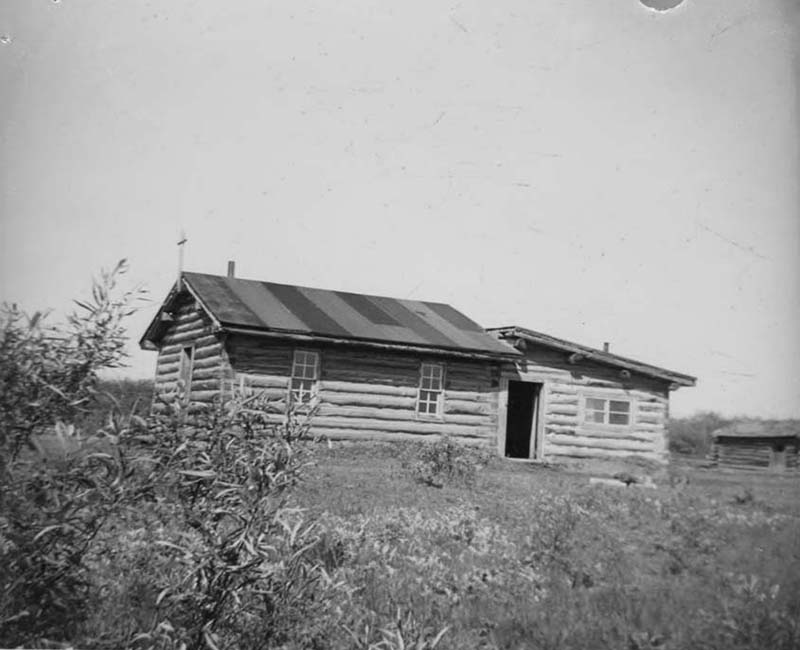
For a period of more than 150 years, First Nations, Inuit and Métis Nation children were taken from their families and communities to attend schools which were often located far from their homes. More than 150,000 children attended Indian Residential Schools. Many never returned.
The first church-run Indian Residential School was opened in 1831. By the 1880s, the federal government had adopted an official policy of funding residential schools across Canada. The explicit intent was to separate these children from their families and cultures. In 1920, the Indian Act made attendance at Indian Residential Schools compulsory for Treaty-status children between the ages of 7 and 15.

The Truth and Reconciliation Commission of Canada (TRC) concluded that residential schools were “a systematic, government- sponsored attempt to destroy Aboriginal cultures and languages and to assimilate Aboriginal peoples so that they no longer existed as distinct peoples.” The TRC characterized this intent as “cultural genocide.”
The schools were often underfunded and overcrowded. The quality of education was substandard. Children were harshly punished for speaking their own languages. Staff were not held accountable for how they treated the children.
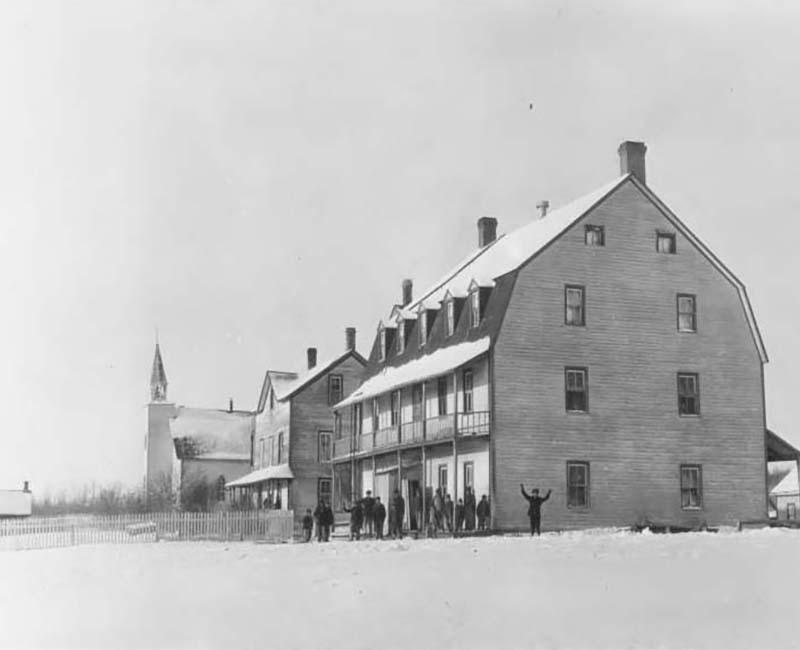

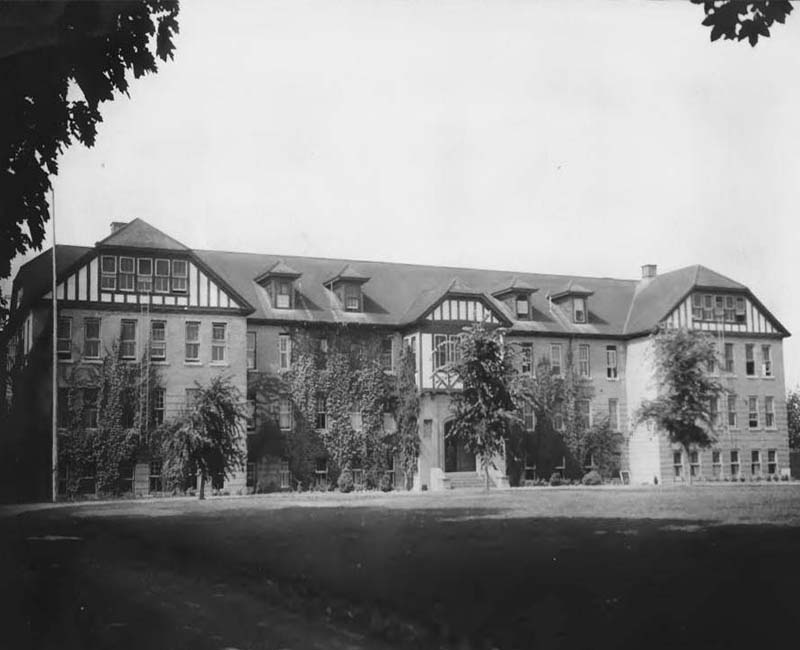
We know that thousands of students suffered physical and sexual abuse at residential schools. All suffered from loneliness and a longing to be home with their families.
The schools hurt the children. The schools also hurt their families and their communities. Children were deprived of healthy examples of love and respect. The distinct cultures, traditions, languages, and knowledge systems of First Nations, Inuit and Métis peoples were eroded by forced assimilation.
The damages inflicted by Residential Schools continue to this day.
For a great many Survivors, talking about their experiences in residential schools means reliving the traumas they experienced. For years, many told no one about what they had endured.
In 1996, the landmark Royal Commission on Aboriginal Peoples drew attention to the lasting harm that was done by the residential schools. A growing number of Survivors and their descendants came forward to tell their stories and demand action.
Through their courage and persistence, an eventual legal settlement was reached between Survivors, the Assembly of First Nations, Inuit representatives and the defendants, the federal government and the churches responsible for the operation of the school. The Indian Residential Schools Settlement Agreement included:
It is important to acknowledge that the Settlement Agreement was not comprehensive. The Métis Nation Survivors were not part of the Settlement Agreement. A separate settlement was reached with Survivors from Newfoundland and Labrador in 2016. A settlement agreement with Survivors of federal Indian Day Schools was not reached until 2019.
The NCTR is carrying on key aspects of the TRC’s work, including safeguarding and adding to the archive of Survivor statements and other records and building a registry of the thousands of children known to have died in residential schools.
In September 2020, Parks Canada announced that Residential Schools had been designated an event of national historical significance. Such designations mark aspects of Canadian history, whether positive or negative, that have had a lasting impact on shaping Canadian society.
The Canadian Parliament passed legislation, Bill C-5, to create a national day of commemoration to honour residential school Survivors and promote understanding of residential school history. The TRC called for such commemoration in its Calls to Action (Call to Action 80). The first National Day for Truth and Reconciliation took place September 30, 2021.
Article Originally in Print online:
https://nctr.ca/education/teaching-resources/residential-school-history/
Reference care of Homeless Hub which also employs a explanatory video:
Safe, emergency shelters are available to people (19+ years old) who are currently homeless or at-risk of becoming homeless. We offer two locations: Hyland House in Newton and Bill Reid Place in Cloverdale. The shelters offer additional support for improving life skills, finding employment and/or housing, managing a home, integrating into the community and budgeting.
6595 King George Blvd.
Surrey, BC V3W 4Z4
Hyland House is a 35-bed shelter for men and women with single rooms, shower and laundry facilities and meals are provided. The facility is wheelchair accessible. There are 20 self-contained transitional houses for longer stays. For more information, please contact us at 604.599.8900.
17752 Colebrook Road
Surrey, BC V3S 0L5
Bill Reid Place is a 16-bed shelter with 12 bachelor transition housing units, shower and laundry facilities and meals are provided. The facility is pet-friendly. For more information, please contact us at 604.574.4341.
Dangerous, severe weather can be life-threatening if you are homeless. We offer response to Extreme Weather Alerts in Surrey, White Rock or Delta.
You may be eligible for a short term rental subsidy, please connect with us at 604.590.7368 or housing.registry@options.bc.ca.
You may qualify for assistance from the Supported Housing program if you require additional support through an extended stay. This 32-unit Supported Housing component can help you achieve and maintain independence. Rent costs are based on current income and length of stay depends on ability to secure and maintain independence.
If you are currently living on the street or are at-risk of homelessness, Outreach Workers are available to help you find housing, health and income support services. To get in touch with our Mobile Outreach Team please contact them at 604.765.6751 or hylandoutreach@options.bc.ca.
Other community resources are provided in our Surrey Survival Guide. It is in booklet format and available for download here. We make every effort to ensure the information is up-to-date. If you are aware of more current information, please notify us by email or call 604.596.4321.
We want to assist those living on the street and people at-risk of homelessness the best we can. In order to do that, we need support from you! Please consider donating to our Shelter Services programs.
Our Shelter Services programs are always in need of items such as: gift cards, gloves, hats, shoes, socks, backpacks, jackets, blankets, water and everyday personal hygiene items. If you are able to provide any of these items, please contact our Hyland House for drop-off instructions. Call 604.599.8900.
Eligibility Criteria
For adults (19+ years old) who are in need of emergency shelter. Contact 604.599.8900.
Can you access the program directly?
Yes. You may access the program directly.
Referrals are also accepted from – but not limited to, the Ministry of Human Resources, Mental Health Centers, RCMP and other community agencies.
Other referral options
You may access the program directly.
Referrals are also accepted from – but not limited to, the Ministry of Human Resources, Mental Health Centers, RCMP and other community agencies.
Currently we are looking for volunteers to help support our shelters. For more information please click here.
Bruce Strom
Senior Program Manager
604.599.8900 | bruce.strom@options.bc.ca
Originally Published on this website for Shelters and Housing Services

Having a safe and stable place to call home is central to leading a healthy and prosperous life. In 2021, we asked Canadian households if they had ever experienced some form of homelessness in their lifetime. Over one in ten (11.2%) Canadians or 1,690,000 people reported that they had.
Homelessness is often thought of as living in a shelter, or completely unhoused in an encampment or public space. This kind of homelessness in Canada is referred to as absolute homelessness, an experience shared by 2.2% of households at some point in their lives. There are, however, many more Canadians (10.5%) who have experienced hidden homelessness, like couch surfing, because they had nowhere else to live.
This lack of stable housing can result in disparities between groups of people, with some more or less likely to have faced homelessness than others. For example, Indigenous households (29.5%) were almost three times as likely to have experienced some form of homelessness when compared with the total population, while racialized (9.5%) and immigrant (8.3%) households were below the national average. Similarly, recent point-in-time counts of homeless shelters nation-wide have found that 35% of respondents identify as Indigenous.
What drives people into homelessness in Canada and why have so many Canadians found themselves without a home? We asked Canadians to tell us what happened leading up to their homelessness episode, and for those who experienced hidden homelessness, we asked those who had been homeless for more than a month. Here’s what they told us…
Deteriorating housing affordability following the onset of the pandemic, combined with higher unemployment and fewer job vacancies in recent months, along with a surge in inflation throughout 2021 and 2022, has led to higher costs for essential goods and services. These factors continue to place financial pressures on many households across Canada.
In the fall of 2022, almost half (44.0%) of Canadians were very concerned with their household’s ability to afford housing or rent. So, it comes as no surprise that the most reported reason leading to homelessness was financial issues (41.8%).
The link between abusive home situations and homelessness is an ongoing concern as the incidence of family violence in Canada rose for the fifth consecutive year in 2021, with women and girls accounting for two-thirds of the victims.
Relationship issues (36.9%) was the second leading factor driving Canadians into homelessness. A related driver was fleeing abuse (13.3%)—a common pathway into homelessness for many, but four times more likely for women than for men (20.9% vs 5.2%).
When looking at absolute homelessness exclusively, these figures double—with just over two in five women (40.4%) reporting absolute homelessness at some point as a result of fleeing abuse, compared with 12.1% of men.
While financial and relationship issues are the most common causes of homelessness, health-related issues can also lead to homelessness episodes.
Canadians who have experienced any form of homelessness were more likely to report fair or poor mental health (38.0% versus 17.3%) than the overall population. More respondents listed health issues as a major factor contributing to absolute homelessness (16.5%) than to hidden homelessness (8.9%).
Canadians experiencing homelessness and underlying mental health conditions have also been highly represented in recent opioid hospitalizations.
Canadians move for a variety of reasons, including changing household size, employment, better housing or neighbourhoods, and evictions, leading to many diverse experiences of hidden homelessness.
Other notable drivers of hidden homelessness are relocation (20.9%) and waiting to move into a new home (16.0%). Over one in three households relocating at some point in the past reported waiting over six months in a state of hidden homelessness.
Households experiencing homelessness in the past were more likely to be living in dwellings in need of major repairs or in core housing need. No matter how someone becomes homeless, housing (or the lack thereof) has been shown to have a significant effect on one’s future—for better or for worse.
Originally Published on a Federal Canadian Site; StatsCan December 06th, 2023
An adequate supply of safe, affordable and appropriate housing is a prerequisite to truly ending homelessness in the long term. This includes ensuring that people who are chronically and episodically homeless are prioritized and that systems are in place to enable such persons to receive housing and supports through Housing First programs.
In a tight housing market, implementing a Housing First agenda becomes that much more challenging. It is also important to address the supply of affordable housing, in order to broaden access for other priority populations, including women fleeing violence, Indigenous Peoples, families, seniors and youth, for instance.
Ultimately, addressing Canada’s housing crisis comes down to money, which then begs the question about our national priorities.
Canadian homeowners enjoy over $8.6 billion in annual tax and other benefits. This kind of investment in home ownership is important because it benefits millions of middle-income households.

Spending on affordable housing for Canada’s poorest households, however, is less than one quarter of that invested in homeownership at approximately $2.1 billion per year and has declined quite dramatically over the past 25 years.
Ironically, it costs more to ignore our housing problem than it would to fix it. Consider the estimate that homelessness alone costs the Canadian economy over $7 billion per year. While the Government of Canada invests $119 million annually to address homelessness through the Homelessness Partnering Strategy (provinces and municipalities also invest), this is not sufficient to address the problem and as a result has not led to a noticeable reduction in homelessness.
By not investing adequately in housing for the poorest Canadians, health care, justice and other taxpayer-funded costs increase.

Put another way, as Canadians, we are spending more money on people who do not need help compared to those in greatest need. And by not spending on those in greatest need, we are not only creating hardship for many Canadian families, we are creating a considerably larger expense for the Canadian economy.
We can do things differently. In the State of Homelessness in Canada 2014, we propose a robust housing investment strategy that would cost the economy much less than the current costs of homelessness. The key elements of our strategy include the following proposals:
Our proposed investment in affordable housing represents an increase in annual federal spending, from the projected commitments of $2.019 billion to $3.752 billion in 2015/16 with a total investment of $44 billion over ten years. These proposals have been carefully costed, drawing from the work of Jane Londerville and Marion Steele and the Canadian Housing and Renewal Association.
While this significantly increases the current federal investment, we feel that in addition to it being the right thing to do, it is also something we can afford to do. Over the past 25 years, federal spending on low-income affordable housing (on a per capita basis) dropped from over $115 annually, to slightly more than $60 (adjusted to 2013 dollars). Our proposals would raise the per capita investment to approximately $106 per Canadian annually, or $2.04 a week (currently per capita spending amounts to $1.16/week). While this may seem like a significant increase over previous levels, it is still less than what we were paying in 1989. Additionally, it is necessary to address the accumulated affordable housing deficit built up over the past 25 years. To be clear, this proposal will not completely end homelessness in Canada, but it will dramatically reduce chronic and episodic homelessness.
For years we have been investing in a response to homelessness that, while meeting the immediate needs of people in crisis, has arguably had no impact in reducing the scale and scope of the problem. Our proposal will contribute to an end to chronic homelessness and reduce the likelihood that many others will fall into homelessness in the future.
Reproduced from: Stephen Gaetz, Tanya Gulliver, & Tim Richter: (2014) The State of Homelessness in Canada 2014. Toronto: The Canadian Observatory on Homelessness Press.
If you go to the Google Play store and search for employment gig applications, you’ll see an ever increasing number of them. So, being the Urban Survivor that we are, we tried them out in a real world test situation, that and we needed money which in case they are a viable option.
There’s quite a list , and they do work, but there is work and then there’s the quality of work. Life is so quick and fast now, you miss one paycheck and you’re out on the street, so you do what you have to… you serve the devil to pay the priest ( which makes no sense ).
The gig apps all vary in “realness”. We got a few job referrals and chased down two or so. We also work with a few real world temp agencies ( work is work ) the applications are cool, except you need that human contact which some if not most of the apps do have.
They figured that out ( there’s got to be a human on the other end to empathize ) if not, there’s no sense of commitment or loyalty. i.e. If I don’t go to a job booked through an app without the human contact element there’s no ” I must fulfill an obligation ” component. The human element we’re becoming so unused to.
We found that most of them don’t really have a lot to offer, and are unforgiving if you miss a booking. One charges a 3+ dollar fee to pay you as per their own t.o.s . It is “new” these temp employment agency apps. How will they do? One has already run afoul of the immigration folk in Canada.
The apps serve their purpose but are vulnerable to abuse, first the information you send them about yourself, your social security number etcetera, companies not located in N. America are collecting this information from consumers, who submit it without a thought.
We have to work, one way or another it’s what kind of work? you do that will dictate how happy you are in your life.