BC Civil Liberties Association Suing Vancouver Over Daytime Shelter Ban

Featured

Vancouver has been hit with a lawsuit over what human rights advocates call the city’s “cruel, dehumanizing, and deadly” daytime ban on homeless outdoor sheltering. Kier Junos has more.

By Emma Crawford

Posted January 30, 2025 6:34 pm. 

Last Updated January 30, 2025 7:07 pm.

The BC Civil Liberties Association (BCCLA) says it is taking the City of Vancouver to court on behalf of unhoused people affected by a ban on daytime shelters.

Calling the ban “cruel, dehumanizing, and deadly,” the association is challenging the city bylaws that make it illegal for unhoused people to shelter outdoors during the day.

“Unhoused people deserve to have their government treat them with dignity and respect,” the BCCLA said. “Instead, many municipalities choose to enforce bans on daytime sheltering with callous cruelty by forcing people to either carry their belongings around all day or be violently decamped if they try to shelter.”

According to the group, unhoused people in Vancouver are subject to constant harassment, surveillance, and violence. In its enforcement of the ban, the association says, the city engages in daily street sweeps that destroy people’s personal belongings, including tents, sleeping bags, and medications.

Also read:

The city’s website says unhoused people are permitted to set up temporary shelters in parks from dusk to dawn but they must be removed at sunrise “to make parks available to support the health and well-being of the whole community.”

In a statement, the city says it can’t comment on matters before the courts, but confirmed staff will review the legal documentation once it is received.

The liberties association says it is “impossible” for those with physical or mental disabilities to set up and take down their shelter daily and then carry it throughout the day.

Jason Rondeau, one of the plaintiffs, was living on the streets for five years until recently when he got into social housing in the Downtown Eastside.

“For myself, it’s not really affecting me anymore because I am housed now,” Rondeau said.

“But I’ve got a lot of friends out there who are still in the thick of it, and their life is hard. Without the sweeps, their life is already hard.”

Vibert Jack, litigation director for the BCCLA, says the lawsuit will also address city bylaws that govern tents on the sidewalk.

“The courts have said already that these types of bylaws are unenforceable at night because it makes it impossible for people to sleep overnight in shelter,” Jack said.

“Our position is the same logic applies during the day.”

For three years, CRAB Park in Vancouver’s Downtown Eastside was the only place in the city where unhoused people could legally camp in the daytime. This was closed late last year.

Now if you’re an unhoused person and you want to camp overnight in a Vancouver Park, you have to take down your tent every morning at 8 a.m.

In its claim, the BCCLA says the daytime shelter ban violates three separate sections of the Charter of Rights and Freedoms, in that it subjects citizens to “extreme cruelty,” puts peoples’ safety, security, and survival at risk, and threatens equality rights of diverse people, including those with disabilities.

With files from Kier Junos and The Canadian Press.

Originally published on Vancouver City News’ Online site.

Authored By: Emma Crawford

Canada’s New Disability Benefit: A step forward, but is it enough?

Featured

The Canada Disability Benefit (CDB) is set to launch in July 2025 but not much is known about it, yet

(Play Media above to listen to this article)

In July 2025, a new era dawns for Canadians with disabilities. The Canada Disability Benefit (CDB) is set to launch, promising a much-needed financial lifeline for adults aged 18 to 64. It’s a significant shift in how the government approaches disability support, but the devil, as they say, is in the details.

The CDB will offer a maximum annual payment of $2,400 – that’s $200 a month – for the initial period from July 2025 to June 2026. Think of it as a foundational layer, a structured payment designed to ease the crushing financial weight many disabled Canadians carry. It’s a far cry from a silver bullet, however.

——————–

Before the CDB, the landscape was a patchwork quilt of provincial programs and the Canada Pension Plan Disability (CPP-D). While helpful, these existing systems often left individuals struggling.

“It won’t make much of a difference, $200 doesn’t go very far these days,” she adds, “If the government really wants to make a difference in my life and other disabled people they need to turn $200 into $500,” says Rae-Darlene Lavoie, who lives with Multiple Sclerosis and is wheelchair bound.

Many provincial programs are notoriously stingy, imposing restrictive eligibility criteria and offering paltry sums that barely cover the basics. It’s like trying to fill a bathtub with a teaspoon – a Sisyphean task, to say the least.

Amanda MacKenzie, national director of external affairs for March of Dimes Canada, painted a stark picture. She highlighted the pervasive reality of many disabled Canadians living on less than $30,000 annually. This isn’t just a statistic; it’s a reflection of a system that, until now, has fallen short.

The CDB aims for a more equitable, consistent approach, tailoring payments to individual and spousal income. While this is a step in the right direction, critics argue that $200 a month simply isn’t enough to meet the escalating cost of living, especially for those with complex medical needs. The whispers of inadequacy are loud, and advocates are pushing for a substantial increase.

——————–

Service Canada promises detailed application information in Spring 2025. This is good news; clarity is crucial. However, the CDB’s true efficacy hinges on its implementation and the government’s responsiveness to ongoing concerns. Will it alleviate the financial strain, or will it merely offer a palliative, a band-aid on a gaping wound?

The CDB’s arrival coincides with a broader, much-needed conversation about disability rights and financial security. Advocacy groups are pushing for a holistic approach, viewing the CDB as a single piece of a much larger puzzle. They’re clamouring for increased funding for support services, accessible housing, and improved healthcare – all vital components of a truly inclusive society.

The CDB Is both a beacon of hope and a test of the government’s commitment. It’s a starting point, a foundation upon which a more equitable system can be built. But its success depends entirely on continuous dialogue, active listening, and a willingness to adapt and adjust based on the lived experiences of those the benefit is intended to serve.

The journey to true inclusivity is a marathon, not a sprint, and the CDB could mark a significant mile marker, but the race will still be far from over.

Article Originally published by Elliot Lake Today’ Web Site, click here.

Authored by Lisa Rene-de-Cotret, reporter for ElliotLakeToday.com/

Residential School History / Day of Truth and Reconciliation

Featured

For a period of more than 150 years, First Nations, Inuit and Métis Nation children were taken from their families and communities to attend schools which were often located far from their homes. More than 150,000 children attended Indian Residential Schools. Many never returned.

The first church-run Indian Residential School was opened in 1831. By the 1880s, the federal government had adopted an official policy of funding residential schools across Canada. The explicit intent was to separate these children from their families and cultures. In 1920, the Indian Act made attendance at Indian Residential Schools compulsory for Treaty-status children between the ages of 7 and 15.

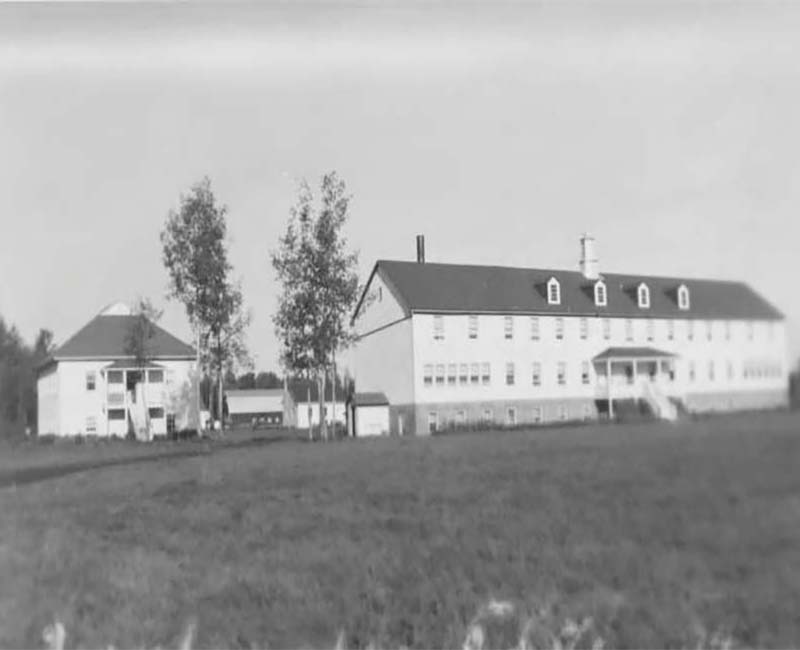
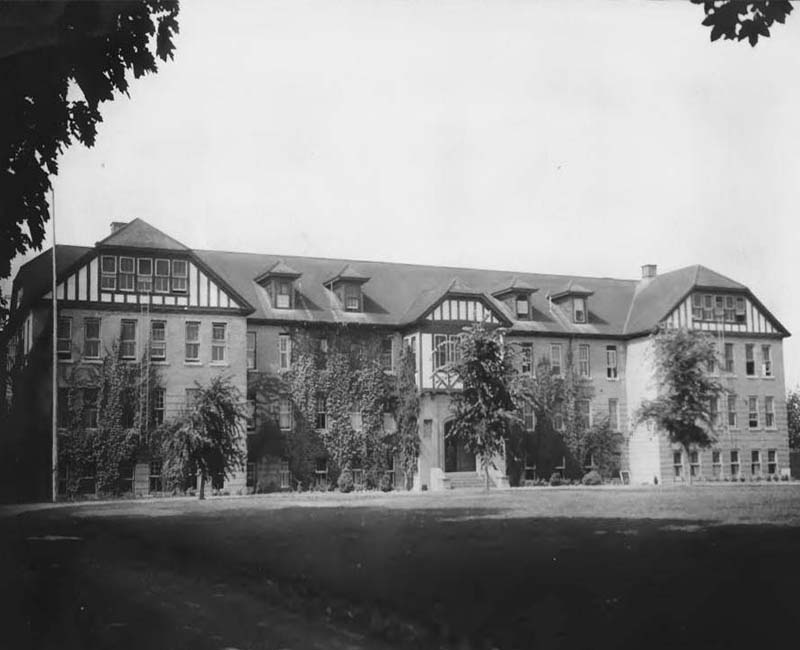
Assumption Hay Lakes school building
Assumption Hay lakes school building

The Truth and Reconciliation Commission of Canada (TRC) concluded that residential schools were “a systematic, government- sponsored attempt to destroy Aboriginal cultures and languages and to assimilate Aboriginal peoples so that they no longer existed as distinct peoples.” The TRC characterized this intent as “cultural genocide.”

The schools were often underfunded and overcrowded. The quality of education was substandard. Children were harshly punished for speaking their own languages. Staff were not held accountable for how they treated the children.

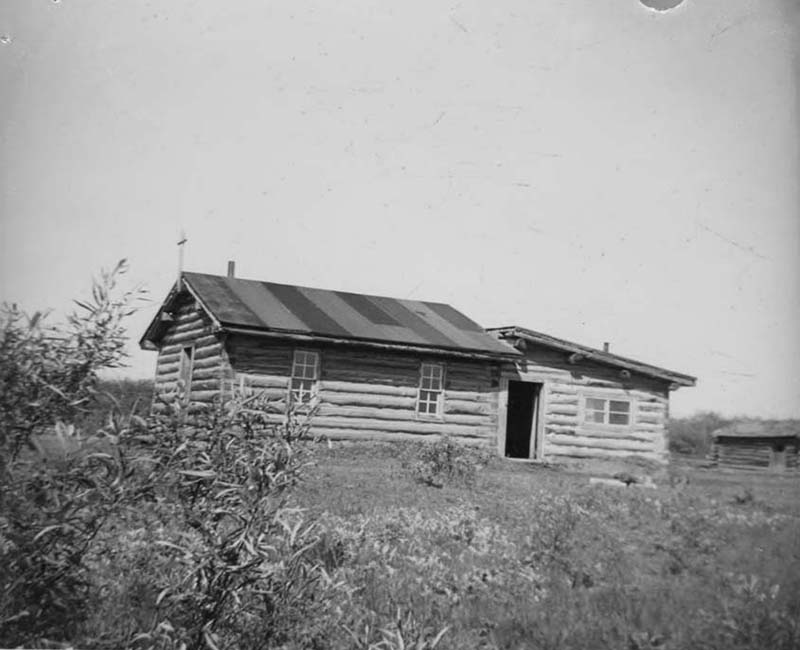
St. Anthony's Sacred Heart building
St. Anthony’s Sacred Heart building
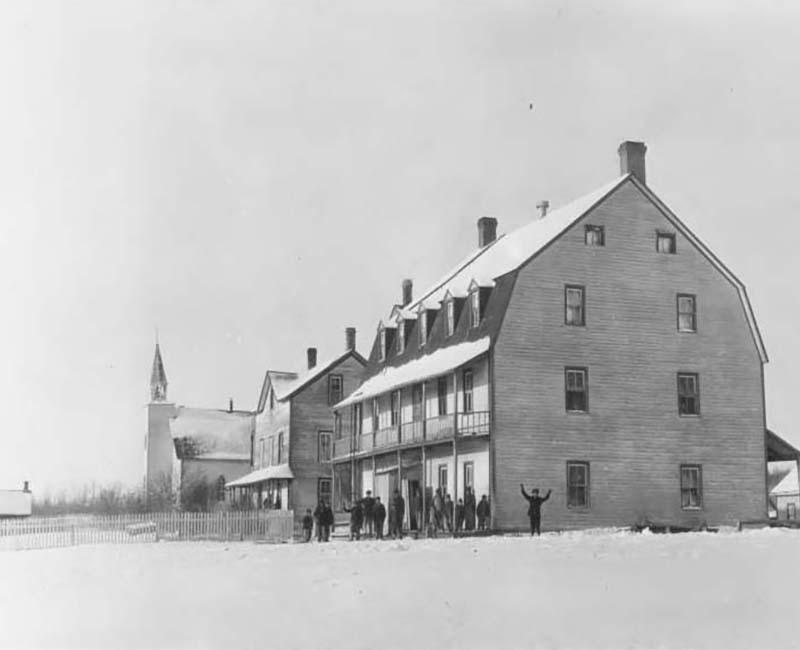
Crowfoot St. Joseph building

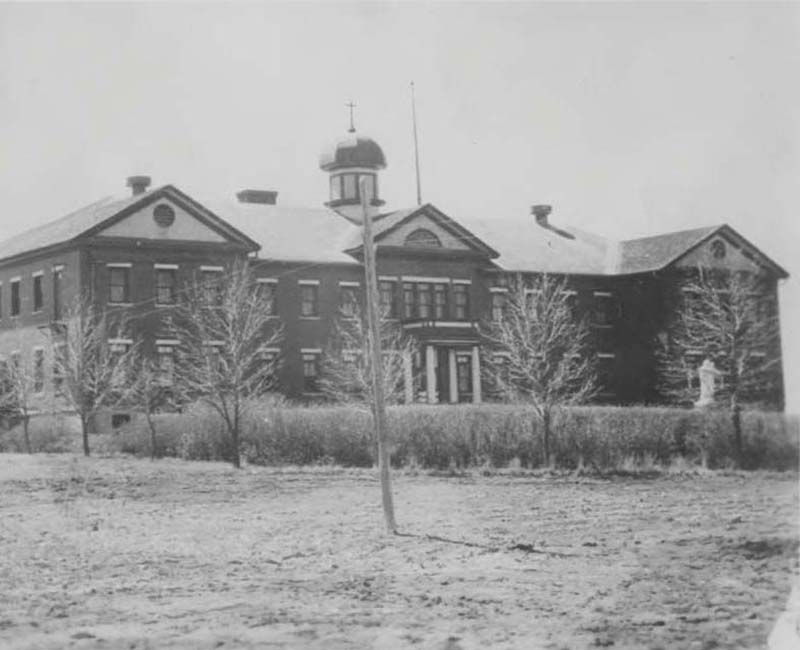
Coqualeetza Chilliwack School building

We know that thousands of students suffered physical and sexual abuse at residential schools. All suffered from loneliness and a longing to be home with their families.

The schools hurt the children. The schools also hurt their families and their communities. Children were deprived of healthy examples of love and respect. The distinct cultures, traditions, languages, and knowledge systems of First Nations, Inuit and Métis peoples were eroded by forced assimilation.

The damages inflicted by Residential Schools continue to this day.

For a great many Survivors, talking about their experiences in residential schools means reliving the traumas they experienced. For years, many told no one about what they had endured.

In 1996, the landmark Royal Commission on Aboriginal Peoples drew attention to the lasting harm that was done by the residential schools. A growing number of Survivors and their descendants came forward to tell their stories and demand action.

Through their courage and persistence, an eventual legal settlement was reached between Survivors, the Assembly of First Nations, Inuit representatives and the defendants, the federal government and the churches responsible for the operation of the school. The Indian Residential Schools Settlement Agreement included:

  •  A commitment to a public apology. On June 11, 2008 then Prime Minister Stephen Harper issued a formal Statement of Apology on behalf of Canada. The Apology stated that, “There is no place in Canada for the attitudes that inspired the Indian residential schools system to ever again prevail.”
  • Financial compensation to Residential School Survivors including a lump sum Common Experience Payment, the Independent Assessment Process for the most serious forms of individual abuse, and a Commemoration Fund.
  • The creation of the Truth and Reconciliation Commission to inform all Canadians about what happened in the Residential Schools by witnessing and documenting the truth of Survivors, families, communities and anyone personally affected by the Schools. The TRC issued an extensive report on the history of residential schools as well as Calls to Action and Principles of Reconciliation.

It is important to acknowledge that the Settlement Agreement was not comprehensive. The Métis Nation Survivors were not part of the Settlement Agreement. A separate settlement was reached with Survivors from Newfoundland and Labrador in 2016. A settlement agreement with Survivors of federal Indian Day Schools was not reached until 2019.

The NCTR is carrying on key aspects of the TRC’s work, including safeguarding and adding to the archive of Survivor statements and other records and building a registry of the thousands of children known to have died in residential schools.

In September 2020, Parks Canada announced that Residential Schools had been designated an event of national historical significance. Such designations mark aspects of Canadian history, whether positive or negative, that have had a lasting impact on shaping Canadian society.

The Canadian Parliament passed legislation, Bill C-5, to create a national day of commemoration to honour residential school Survivors and promote understanding of residential school history. The TRC called for such commemoration in its Calls to Action (Call to Action 80). The first National Day for Truth and Reconciliation took place September 30, 2021.

Article Originally in Print online:

https://nctr.ca/education/teaching-resources/residential-school-history/

Reference care of Homeless Hub which also employs a explanatory video:

The Disparity in Dental Care Between the Rich and the Poor

Featured

A person receiving dental care
Disparity in dental care

Proper dental care is essential to living a healthy life. However, there’s a greater chance for people from low-income backgrounds to have greater dental health problems than those from affluent families. Here’s a quick analysis of the disparity in dental care between the rich and the poor.

The Gravity of the Situation

A greater percentage of people from deprived backgrounds have been hospitalized because they needed dental care than those who were better off financially. However, many people from low-income backgrounds struggled to receive the care they needed because 35% of low-income parents and 38% of low-income adults without children did not have health insurance in 2013.

What makes this situation worse is that dental care treatment in the hospital is about 10 times more expensive (even with Medicaid enrollees) than preventative dental care at a dentist’s office. Furthermore, Medicaid doesn’t cover preventative costs. Thus, enrollees have to rely on ER care at the hospital when their conditions worsen.

The Effects of Lack of Dental Care for the Poor

Receiving proper dental care is vital because it affects the patient’s and physical health as well. A lack of proper dental care can contribute to various chronic illnesses that may pertain to cardiovascular disease, pregnancy complications, respiratory infection, and so on.

Regular dental check-ups, cleanings, and prompt treatment of any oral issues are essential for mitigating these risks and ensuring optimal health outcomes. One often overlooked aspect of oral health is the condition of the tongue. A yellow tongue, for instance, can be indicative of various underlying issues, ranging from poor oral hygiene to more serious health concerns. Monitoring the color and appearance of the tongue during routine dental visits can provide valuable insights into a patient’s overall health status.

In addition to physical health ramifications, there are mental health concerns, such as a correlation between decaying or missing teeth and depression. This is also the case because missing teeth can result in increased self-consciousness and societal scrutiny.  So, it makes it more challenging for people from low-income backgrounds to thrive within society.

Lack of proper dental care for people from low-income backgrounds also causes them to struggle with its effects on their employment opportunities. Poor dental care causes patients to experience discrimination in the job market. Thus, there’s a cycle in which disparity in dental care between the rich and the poor causes the latter to continue struggling to receive better dental care because they can’t afford insurance.

Class Inequality in Healthcare | Wealthy? You’ll Be Healthy

Featured

Doctor And Patient Looking At Test Results
Health Care Access For Rich People

The conversation about class inequality in healthcare all over the world has been going on for a while. Whether you are looking at rich nations like the US or poorer nations with shoddy healthcare services, there are clear differences in the sort of care the rich get and the care that the poor get. Due to problems with insurance and high prices, healthcare is really expensive for a lot of people. This has resulted in serious class inequality in healthcare, with only the rich being able to afford access to good care.

With one billion children living below the poverty line across the world, they are more likely to suffer from poor nutrition, obesity, and asthma. Adults who are part of the lower socioeconomic category are also more likely to experience mental illnesses, infectious diseases, heart conditions, obesity, and blood pressure issues.

Taking time off from work to go to the doctor, not being able to pay for services, not having access to healthcare consultancy, and more are common problems. Being poor also means that you have more crises and stress to deal with, which can also add to a person’s health woes.

The gap between the rich and the poor has been sharply increasing since the 1970s. The increase in the gap between the rich and the poor definitely has consequences that can impact individuals deeply. One way to address class inequality in healthcare is to enact top-down policies that are designed to address such inequalities specifically. There needs to be more focus on making sure that healthcare is easy to access for everyone in society without putting you under a big debt of thousands of dollars.