The Toughest Kind of Love: Don’t Stop Writing Your Story

Featured

Life is a collection of chapters, and some of them are undeniably painful to read. There is a popular sentiment that offers profound hope: “Don’t give up because of one bad chapter in your life. Keep going. Your story doesn’t end here.” This wisdom acknowledges that struggle is a part of the narrative, but it insists that it is not the final page. It is a call for resilience, a reminder that identity isn’t fixed by moments of failure or despair.

However, if we apply this metaphor to the crisis of homelessness and addiction on our streets, we must ask ourselves: Are we helping people turn the page, or are we simply buying them a new bookmark while they remain stuck in the same chapter?

The current approach to homelessness is often too passive, too willing to enable stagnation. It can be patronizing to assume that someone in the throes of addiction or living on the streets doesn’t need a hard response. By removing all expectations—by offering housing without requiring sobriety or a commitment to rehabilitation—we risk telling people that they aren’t capable of more . We accept their bad chapter as the whole book.

We need a shift from a handout to a hand up. This means coupling compassion with accountability. It means recognizing that allowing someone to continue using drugs without intervention is not kindness; it is a slow form of surrender . A truly compassionate response says, “Your story doesn’t end in addiction, and it doesn’t end on this street corner.”
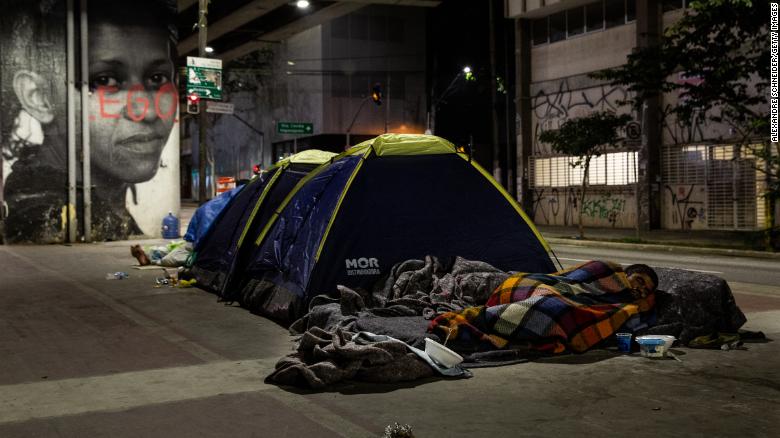
Programs that are beginning to see success are those that provide shelter and support, but also demand recovery and work . They enforce rules, ban public camping, and use the leverage of the law to nudge individuals toward treatment. This isn’t about punishment; it’s about instilling the self-worth that comes from meeting expectations .

If we want to help people write a better chapter, we must stop editing around the margins of their misery. We must provide the structure and the hard line in the sand that says giving up is not an option. Because their story—and ours as a community—doesn’t have to end there.

follow us on Facebook: The Effort of Investment Will Save Faith’s Message Sent
My Name is Brad – A Docu-drama Film / Project in Memory of Kelly Thomas and Countless Others Who Fall Victim to the Stigma of Mental Health and Homelessness in America

Bradley James was born on April 13th, 1972. Kelly Thomas was born on April 5th, 1974. While neither met each other, they both share something in common. They both suffered from schizophrenia. While Brad lives in British Columbia, struggling to make ends meet, Kelly was not that lucky. On July 10th, 2011, while many in America were glued to their television screens, watching in awe as the US team defeated Brazil during the semi-final of the 2011 FIFA Women’s World Cup, Kelly Thomas lay in a hospital bed, bloody and dying.

Kelly Thomas, a man who had struggled with fits of schizophrenia his entire life, was dragged out into the streets and brutally beaten by six officers of the Fullerton California police department – he later succumbed to his injuries.

Now, 57 Years of Soul Music Radio is collaborating with The Urban Survivor Humanitarian Network and Cheektowaga-Omni Media Marketing based in Vancouver, British Columbia, Canada, to tell Kelly’s story to the world. The company is raising funds via Slated, a crowdfunding platform for filmmakers, to launch the production of their film, “My Name Is Brad” in early Spring 2021.

This docudrama film is an initiative to recognize severe mental health issues and make them a mainstream topic of conversation. The film is aimed to show the controversy surrounding mental illnesses and police misconduct. It revolves around the lives of Brad James and Kelly Thomas.

With the current scenarios looking to get worse before they get better, the producers of “My Name Is Brad” believe that now’s the right time to bring this topic to the forefront of humanitarian initiatives that should be prioritized. With the new President in the Oval Office, we are closer to this dream than ever before – to end the injustice, indignation, and stigma associated with mental health and homelessness.

All funds raised through this film will be used to kick start an Urban housing development in all major cities. Modular container housing can be purchased for less than $2000 per unit. Since the government spends millions on everything else, it’s time to end homelessness and help those who are struck with mental illness.

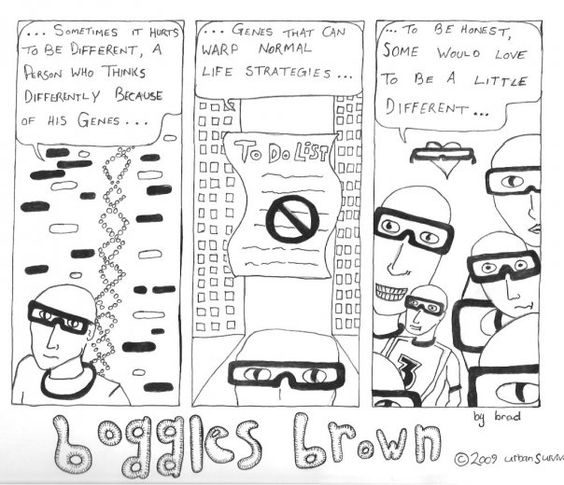
Boggles Brown – The Blurb

Featured

-From “Boggles Brown – My Cartoon Life in the Land Of Schizophrenia” inner sleeve. – 2010

Boggles Brown is broke, except for the “People With Disabilities Allowance” he gets once a month. This month, he lives in a run-down motel – he manages to buy an old beat-up Toyota which is unreliable but reliable if you know what I mean. Somtimes he thinks his car may be bi-polar.

He wonders whether he should be using one of those fancy-named gasoline additives like “Engine-X,” I imagine “Engine-X” to be somewhat like Olanzapine, only for cars.

Boggles Brown struggled through college. He graduated,worked for a while and then became bonkers. It was not worth the ecstacy or all the raves in the world to lose his mind – he knows that now. But it is his life, what to do?

Boggles Brown is not how I see myself so much, as how I think others see me. My mom has read some of my cartoons and scratched her head. I imagine a lot of people will do the same. But that’s not the point – is it? Am I Canada’s Andy Warhol? I think not.

I hope you like Boggles, and if you don’t, I hope you keep it to yourself because the point is that it gave me something to do.

These are all hand-drawn on whatever paper I could find.

– Boggles Brown; “BJAF” 2010

“Genes” – Boggles Brown; Urban Survival Media 2009

Cheektowaga-Omni Launch Fundraiser for Debut Socio-Cultural Movie “My Name Is Brad”

Featured

January 11, 2021: Cheektowaga-Omni, a production, media, and marketing company has today announced its foray into film making with the production of a socially conscious movie, “My Name is Brad”. The company hopes to engage the public and has started fundraising, soliciting support from keen donors and people who value movies with a cultural and socially significant theme.

The prevailing atmosphere in the USA makes it ripe for movies like My Name is Brad to be an eye-opener for a public swayed by bigotry and misinformation. Moreover, homelessness is a growing issue that is affecting many people.

“My Name is Brad” narrates the story of a young middle class suburban white man who struggles through University, only to end up deluded, and living on the streets. He watches his promise die, like so many North American youth today.

Cheektowaga-Omni is a production and media marketing company that was established as a tie up between Cheektowaga Music and Omni creative group Cheektowaga Music was formed by prolific musician, music, entertainment producer and, performer “Little” Herbert in 1986. Cheektowaga-Omni is in the process of reactivating a dormant Analogue TV station in Northern Washington State. This initiative reflects their commitment to blending traditional media with modern technology, offering diverse content ranging from music production to online piano lessons and beyond.

The movie My Name is Brad being produced by Cheektowaga-Omni is in memory of Kelly Thomas, who was killed by members of the Fullerton police dept in 2011. Cheektowaga-Omni has launched fundraising efforts to support the movie and plans are afoot to launch a kick-starter and a web page in support of My name is Brad. Additionally, they are exploring event ticketing options to enhance the film’s reach and impact.

Cheektowaga – Omni media is based in Kelowna BC, with studios located in Abbotsford BC and Vancouver BC.

For more information: See our position on Slated.

Media contact

Dale Corrigan

Cheektowaga – Omni Creative Group

Email:

Website: