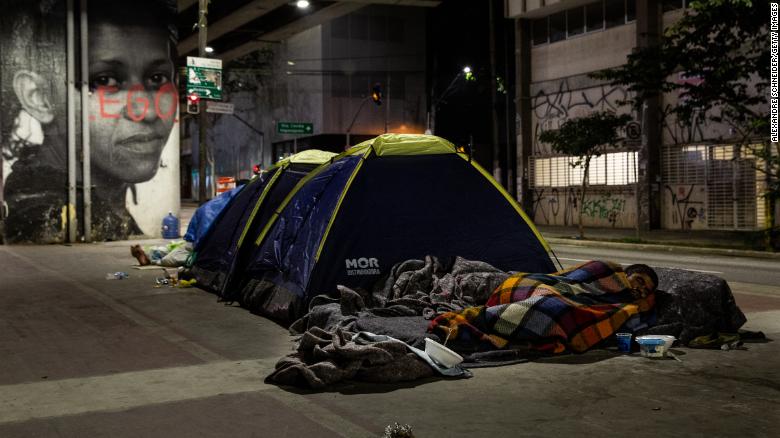
Life is a collection of chapters, and some of them are undeniably painful to read. There is a popular sentiment that offers profound hope: “Don’t give up because of one bad chapter in your life. Keep going. Your story doesn’t end here.” This wisdom acknowledges that struggle is a part of the narrative, but it insists that it is not the final page. It is a call for resilience, a reminder that identity isn’t fixed by moments of failure or despair.
However, if we apply this metaphor to the crisis of homelessness and addiction on our streets, we must ask ourselves: Are we helping people turn the page, or are we simply buying them a new bookmark while they remain stuck in the same chapter?
The current approach to homelessness is often too passive, too willing to enable stagnation. It can be patronizing to assume that someone in the throes of addiction or living on the streets doesn’t need a hard response. By removing all expectations—by offering housing without requiring sobriety or a commitment to rehabilitation—we risk telling people that they aren’t capable of more . We accept their bad chapter as the whole book.
We need a shift from a handout to a hand up. This means coupling compassion with accountability. It means recognizing that allowing someone to continue using drugs without intervention is not kindness; it is a slow form of surrender . A truly compassionate response says, “Your story doesn’t end in addiction, and it doesn’t end on this street corner.”
Programs that are beginning to see success are those that provide shelter and support, but also demand recovery and work . They enforce rules, ban public camping, and use the leverage of the law to nudge individuals toward treatment. This isn’t about punishment; it’s about instilling the self-worth that comes from meeting expectations .
If we want to help people write a better chapter, we must stop editing around the margins of their misery. We must provide the structure and the hard line in the sand that says giving up is not an option. Because their story—and ours as a community—doesn’t have to end there.
Housing First is an established concept in Finland since more than 15 years thanks to the Y-Foundation as a pioneer. The Y-Foundation was also one of the founding members of the Housing First Europe Hub.
In 2016 the Finish Y-Foundation together with FEANTSA established the Housing First Europe Hub. The Y-Foundation has been a key player in establishing Housing First as the main response to homelessness in Finland. Since 2007 national policies shifted towards reducing long-term homelessness through Housing First programmes.
As a result, in Finland, the utilisation of emergency and temporary accommodations, such as shelters, hostels, and temporary supported housing, has significantly declined. The number of homeless individuals residing in hostels or boarding houses decreased by 76% from 2008 to 2017. This reduction is attributed to the widespread adoption of prevention strategies, the replacement of outdated models of communal supported housing with Housing First and housing-led approaches, which largely replaced emergency shelters.
ARA, the Housing Finance and Development Centre, has also been involved in the implementation of Housing First in Finland since the start through subsidising new and renovated homes as well as giving housing advice to municipalities.
As a result, Finland is one of the only European countries that registers decreasing homelessness numbers. The country’s goal is to end homelessness in Finland all together.
Finland has managed to reduce homelessness in recent years, but homelessness as a phenomenon is still alive and well. The homelessness situation often escalates in the context of social and economic crises.
A groundbreaking trial for a prostate cancer treatment with fewer side effects has launched in the UK.
Backed by the Government-funded National Institute for Health and Care Research (NIHR), the trial will examine whether Aquablation – a therapy using robotics, AI and real-time imaging – works as well or better than traditional surgery, known as radical prostatectomy.
Radical prostatectomy involves removing the entire prostate gland in a bid to cure men of prostate cancer. The treatment is suitable for men whose cancer has not spread outside of the prostate gland or has spread to the area just outside the gland.
However, the operation carries a risk of serious side-effects, such as infection, erectile dysfunction and urinary problems.
Researchers hope Aquablation will minimise these issues.
The therapy is currently used in some centres to treat benign prostatic hyperplasia (BPH).
The treatment is suitable for men whose cancer has not spread outside of the prostate gland (Getty/iStock)
Aquablation involves a robotic-assisted, high-pressure waterjet. Surgeons can also map the entire prostate in real time with ultrasound.
Using the technique, medics find cancerous tissue to remove while avoiding surrounding nerves and muscles associated with erectile function and the bladder.
The Royal Marsden NHS Foundation Trust in London is the first hospital in Europe to recruit a patient to the trial, which is being run in seven countries.
Overall, 280 patients will be recruited globally, all with early-stage, localised prostate cancer who have already decided to have surgery.
Philip Charlesworth, consultant urological surgeon at the Royal Marsden, said: “For men with prostate cancer confined to the prostate, curative options are excellent, however, we are becoming increasingly focused on the side-effects of the cancer treatment and how we can embrace new technology to maintain a man’s quality-of-life following their surgery.
“This trial is measuring Aquablation therapy, which uses a robotic approach to surgically remove the cancer, and to preserve a man’s ability to remain continent and maintain sexual activity.
“The potential for this trial is very exciting. It has an opportunity, depending on the results of the study, to add an alternative surgical treatment option for patients with localised prostate cancer across the globe.
“The ultimate aim, and my passion, is to improve prostate cancer treatments so that they cause less harm and are less invasive for the patient.
“I feel that this is an incredibly exciting prospect for the future of prostate cancer care.”
The Royal Marsden NHS Foundation Trust in London is the first hospital in Europe to recruit a patient to the trial (Getty)
Other potential treatments for localised prostate cancer include active surveillance or monitoring of the cancer and radiation.
The new trial is sponsored by the US company, Procept BioRobotics.
To date, there are more than 25 centres globally recruiting patients for the trial.
The four UK centres are the Royal Marsden, Guy’s and St Thomas’ NHS Foundation Trust, the Royal Free London NHS Foundation Trust and Norfolk and Norwich University Hospitals NHS Foundation Trust.
The trial comes after Health Secretary Wes Streeting said earlier this week he was “surprised” by the decision from scientific advisers to limit prostate cancer screening.
In a draft recommendation, the UK National Screening Committee (UKNSC), which advises the Government, said prostate cancer screening should not be made routinely available for the vast majority of men in the UK.
It said it would not recommend population screening using the prostate-specific antigen (PSA) test because it “is likely to cause more harm than good”.
Experts are expecting data within two years from a large trial launched by Prostate Cancer UK into whether combining PSA with other tests, such as rapid MRI scans, could lead to a recommendation for population-wide screening.
For now, the committee will put forward only a recommendation to screen men with BRCA1 and BRCA2 genetic mutations – which puts them at far higher risk of prostate cancer – every two years, between the ages of 45 and 61.
Main symptoms of prostate cancer
Prostate cancer usually starts to grow on the outer part of the prostate. If this happens, it can cause changes to the way you pee, such as:
finding it difficult to start peeing or straining to pee
having a weak flow of urine
“stop start” peeing
needing to pee urgently or often, or both
feeling like you still need to pee when you’ve just finished
peeing during the night
Other symptoms can include:
erectile dysfunction (being unable to get or keep an erection)
blood in your urine or blood in your semen
lower back pain and losing weight without trying to (these may be symptoms of advanced prostate cancer)
Speaking on Wednesday on BBC Breakfast, Mr Streeting said he was surprised by the decision.
He said: “I’m looking very carefully at why the national screening committee reached that decision.
“I’ve always said these things have got to be based on science and evidence, not on politics.
“But the recommendation did surprise me.
“This is contested. I’ve got people in the prostate cancer community and not just really prominent patients and celebrities and politicians who’ve used their experience and their voice in this debate, but among scientists and researchers.
“This is a draft recommendation. They consult on this for three months, and then we have to make a final decision.
“What I’m going to do is get some of those leading, best scientific voices and competing opinions around the table to thrash this out, to really interrogate the data and make sure that when I come on your programme having made a decision, it’s the right decision for the right reasons, the best evidence and the public can then understand why we’ve made the decision and the scientific community can understand why we’ve made the decision.
“But I am interrogating this data and recommendation because it did surprise me.”
Many experts argue that the PSA test is not very reliable because men with a high PSA level may not have cancer, and some men with cancer have a normal PSA result.
A positive test result may lead to unnecessary treatment for slow-growing or harmless tumours, leaving men at risk of side effects such as incontinence and erectile dysfunction.
But others argue that current evidence supports wider testing.
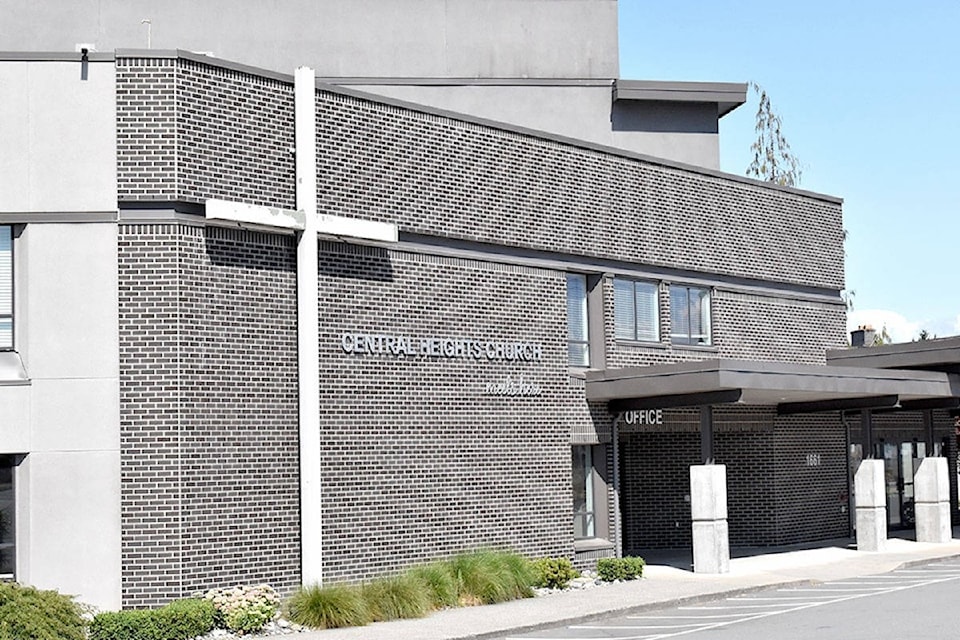
Central Heights Church in Abbotsford is planning a 30-bed emergency shelter for older adults. Ben Lypka/Abbotsford News file
Listen to this article by accessing the above player.
A 30-bed emergency shelter for older adults is being planned at Central Heights Church in Abbotsford.
The plan came before city council on Tuesday afternoon (Feb. 25), when a temporary-use permit and housing agreement were approved.
A staff report to council states that 30 individual “sleeping units” will be provided in an existing building on the church property at 1661 McCallum Rd.
That area at the north end of the building has been operating by Sparrow Community Services Society as a severe weather shelter for older adults.
A letter to the city from BC Housing in September 2024 states that in order to accommodate the emergency shelter, the building will be renovated to include sufficient washroom and shower facilities, accessible entry and operator spaces.
The space is expected to be completed this winter.
The Central Heights Church Shelter will continue to be run by Sparrow – which serves older adults (50+) who are at risk of homelessness – under an agreement with BC Housing.
Support services will be provided 24/7 under the Homelessness Encampment Action Response Temporary Housing (HEARTH) and Homelessness Encampment Action Response Team (HEART) programs.
The staff report to council says a temporary-use permit was required to accommodate the proposed use as it abuts an existing residential use.
The permit will be valid for three years, with the opportunity to request one three-year extension.
The housing agreement includes that the operators must form a good neighbour committee with monthly meetings for the first four months and then on an as-needed basis.
The operators must also provide support services – directly or through referrals – such as life-skills training, counselling and substance-use services.
They must also at least have two staff on site 24/7, and ensure that guests “do not disturb the peace, quiet and enjoyment of the neighbourhood.”
The project has drawn support from Fraser Health and the Abbotsford Police Department, which states that the current services offered at the site have required fewer police resources than comparable facilities.
The city says there are currently 40 encampments and more than 400 unhoused individuals across Abbotsford.
A slumlord is a derogatory term used to describe a landlord who knowingly maintains rental properties in poor or unsafe conditions, often while charging high rents. Slumlords typically neglect necessary repairs, ignore health and safety codes, and exploit tenants, often those in low-income or vulnerable situations who have limited housing options.
Characteristics of a Slumlord:
Poor Property Maintenance: Failing to address issues like leaky roofs, broken heating systems, mold, pest infestations, or structural problems.
Health and Safety Violations: Ignoring building codes, fire safety regulations, or sanitation standards.
Exploitation of Tenants: Charging high rents for substandard housing, often targeting tenants who lack the resources or knowledge to advocate for themselves.
Lack of Responsiveness: Ignoring tenant complaints or requests for repairs.
Illegal Practices: Engaging in unethical or illegal activities, such as wrongful evictions, rent gouging, or refusing to return security deposits.
The Shifting Sands of the Hourglass of World States, is there a Fourth World?
Legal Context in Canada and the US:
Both Canada and the US have laws and regulations to protect tenants from slumlords, but enforcement varies by region.
Canada: Provincial and territorial laws govern rental housing. Tenants can file complaints with local housing authorities or tenant boards if landlords fail to meet their obligations. For example, in Ontario, the Residential Tenancies Act outlines landlord responsibilities, and tenants can seek recourse through the Landlord and Tenant Board.
US: Housing regulations are enforced at the state and local levels. Tenants can report violations to local housing authorities or take legal action. Many cities have tenant rights organizations that assist renters in dealing with slumlords.
Tenant Rights:
Tenants in both countries have the right to:
Live in a safe and habitable environment.
Request necessary repairs.
Withhold rent or take legal action if the landlord fails to address serious issues.
Be free from retaliation for reporting violations.
Addressing Slumlord Practices:
Document Issues: Tenants should keep records of complaints, repairs, and communication with the landlord.
Report Violations: Contact local housing authorities or tenant advocacy groups.
Legal Action: In severe cases, tenants may sue for damages or force the landlord to make repairs.
Slumlords contribute to the broader issue of housing inequality and the lack of affordable, safe housing in many urban areas. Combating their practices requires stronger enforcement of housing laws and increased support for tenants.
Dealing with a slumlord can be incredibly frustrating and stressful, but there are steps you can take to protect your rights and improve your living situation. Here’s a guide to help you navigate the situation:
1. Know Your Rights
Familiarize yourself with local tenant laws and housing codes. These vary by location but generally guarantee your right to a safe and habitable living environment.
Common landlord responsibilities include providing:
Working utilities (heat, water, electricity).
Proper sanitation and waste disposal.
Structural integrity (no leaks, mold, or pest infestations).
Safe and secure locks on doors and windows.
If your landlord is failing to meet these standards, they may be violating the law.
2. Document Everything
Keep a detailed record of all issues, including:
Photos and videos of unsafe or unsanitary conditions.
Written notes about when problems started and how they’ve been ignored.
Copies of all communication with your landlord (emails, texts, letters, etc.).
This documentation will be critical if you need to take legal action or report the landlord.
3. Communicate with Your Landlord
Notify your landlord in writing about the issues and request repairs. Be specific, polite, and keep a copy of the letter or email.
If they don’t respond or refuse to make repairs, send a follow-up notice and mention your legal rights.
4. Report Code Violations
Contact your local housing authority, health department, or building code enforcement agency to report unsafe or unsanitary conditions.
An inspector may visit your property and issue a violation notice to the landlord, forcing them to make repairs.
Pittsburgh, Pennsylvania, USA – Some abandoned townhouses standing in Uptown district
5. Withhold Rent or Repair and Deduct
In some areas, tenants are allowed to withhold rent or pay for repairs themselves and deduct the cost from rent. However, this can be risky, so:
Check your local laws to ensure this is allowed.
Notify your landlord in writing before taking action.
Keep receipts and documentation for all repairs.
6. Join or Organize with Other Tenants
If other tenants are experiencing similar issues, consider organizing as a group. Landlords are more likely to respond to collective action.
You can also reach out to local tenant unions or advocacy groups for support.
7. Seek Legal Help
If your landlord continues to neglect their responsibilities, consult a tenant attorney or legal aid organization.
You may be able to:
Sue for damages or compensation.
Break your lease without penalty.
Force the landlord to make repairs through a court order.
8. Consider Moving
If the situation doesn’t improve and your health or safety is at risk, it may be best to find a new place to live.
Before moving, ensure you’re not violating your lease and that you’ve followed proper legal procedures to protect yourself from retaliation or eviction.
9. Report to Local Media
If the situation is severe and widespread, contacting local news outlets can bring attention to the issue and pressure the landlord to act.
10. Stay Safe
If you feel threatened or unsafe due to your landlord’s actions, contact local law enforcement or a tenant advocacy group immediately.
Resources to Help You:
Local Housing Authority: For reporting code violations or unsafe conditions.
Legal Aid Organizations: For free or low-cost legal advice.
Tenant Unions: For advocacy and support in organizing with other tenants.
State or Local Tenant Rights Websites: For information on your specific rights.
By taking these steps, you can hold your landlord accountable and work toward a safer, healthier living environment.
Market Necessity: In areas with severe housing shortages, slumlords may provide the only available option for low-income individuals, preventing homelessness.
Economic Realities: Some landlords claim they cannot improve properties without raising rents, which could displace tenants. Low-income tenants might prioritize cost over quality due to limited options.
Criticisms of Slumlords as a Blight:
Exploitative Practices: Charging high rents for substandard housing capitalizes on tenants’ desperation, often violating health/safety codes.
Health and Safety Risks: Poor conditions (e.g., mold, pests, structural issues) harm physical and mental health, disproportionately affecting marginalized communities.
Moral Concerns: Profiting from inadequate housing perpetuates inequality and dehumanizes tenants, prioritizing profit over human dignity.
Community Impact: Neglected properties contribute to neighborhood blight, reducing investment and perpetuating cycles of poverty.
Systemic Context:
Root Causes: Slumlords thrive in systems with inadequate affordable housing, weak regulation, and income inequality. They are a symptom of broader failures in housing policy.
Regulatory Gaps: Weak enforcement of housing standards allows slumlords to operate, while insufficient subsidies or public housing leave tenants with few alternatives.
Conclusion:
Slumlords are primarily a blight, exacerbating poverty and inequality through exploitation and neglect. While they may fill a temporary gap in housing supply, their practices harm individuals and communities. Addressing the issue requires systemic solutions:
Ethical Alternatives: Promote public housing, rent control, and community land trusts to provide dignified, sustainable housing.
Ultimately, the existence of slumlords underscores the need for structural reforms rather than tolerating exploitative stopgaps.
slumlords provide affordable housing. In many cities, there’s a shortage of affordable housing, so even if the housing is substandard, it might be the only option for low-income individuals or families. Without these slumlords, maybe there would be even fewer options, leading to homelessness. But then, the counterargument is that the conditions in these properties are terrible, possibly violating health and safety codes. So even if it’s affordable, is it acceptable for people to live in such conditions?
You’ve highlighted a critical tension in the debate about slumlords and affordable housing: the trade-off between availability and quality. Let’s break this down further:
The Argument That Slumlords Provide Affordable Housing:
Housing Shortages: In many cities, affordable housing is scarce due to rising costs, gentrification, and insufficient public housing. Slumlords fill a gap by offering low-cost options, even if the conditions are poor.
Preventing Homelessness: For some low-income individuals or families, substandard housing may be the only alternative to living on the streets or in shelters, which can be even more precarious.
Market Realities: Slumlords often operate in neighborhoods where property values are low, and the cost of maintaining or improving housing exceeds what tenants can pay. Without them, these properties might remain vacant or be redeveloped into unaffordable housing.
The Counterargument: Unacceptable Living Conditions:
Health and Safety Risks: Substandard housing often violates health and safety codes, exposing tenants to hazards like mold, lead paint, pests, faulty wiring, and structural instability. These conditions can lead to serious health problems, especially for vulnerable populations like children and the elderly.
Exploitation: Slumlords often charge rents that are disproportionately high relative to the quality of the housing, exploiting tenants who have no other options.
Moral and Ethical Concerns: Allowing people to live in such conditions raises ethical questions about dignity and human rights. Affordable housing should not come at the cost of basic safety and well-being.
Long-Term Costs: Poor housing conditions can perpetuate cycles of poverty by affecting tenants’ health, education, and employment opportunities, ultimately costing society more in healthcare, social services, and lost productivity.
The Broader Systemic Issue:
The existence of slumlords is a symptom of deeper systemic failures:
Lack of Affordable Housing: Governments and private developers have not built enough affordable housing to meet demand, leaving low-income individuals with few options.
Weak Regulation and Enforcement: In many places, housing codes are not strictly enforced, allowing slumlords to operate with impunity.
Economic Inequality: Rising income inequality and stagnant wages make it difficult for many people to afford decent housing, forcing them into substandard options.
Is It Acceptable?
While slumlords may provide a temporary solution to housing shortages, the conditions they offer are fundamentally unacceptable. Affordable housing should not come at the cost of health, safety, or dignity. The solution lies in addressing the root causes of the problem:
Policy Solutions: Governments should invest in affordable housing, enforce stricter housing codes, and provide subsidies or incentives for landlords to improve properties.
Community Initiatives: Nonprofits and community land trusts can develop and maintain affordable, high-quality housing for low-income residents.
Tenant Protections: Stronger tenant rights and rent control measures can prevent exploitation and ensure that housing remains affordable and habitable.
In conclusion, while slumlords may fill a gap in the short term, their existence is a symptom of systemic failures that need to be addressed. Affordable housing should not mean substandard housing, and society must strive to provide safe, dignified living conditions for all.